

I just viewed a valuable training mentoring video from my training Guru, Susan Garrett, in which she explained that you can’t train emotional reactions, and of course she’s right.
We can understand dog emotions simply by understanding our own emotions. When I’m crying, don’t ask me to do anything! If I’m pissed, which of course only happens to other people, or anxious, which I’ve been constantly since about 2016, it has various degrees of influence on all my behaviors, requiring different life strategies for myself.
But also, I used to be terrified of deep water. That happened because my mother’s friend wanted to teach me how to swim. I must have been 6 years old. She carted me out to water where the waves washed over my mouth and I felt like I was drowning.
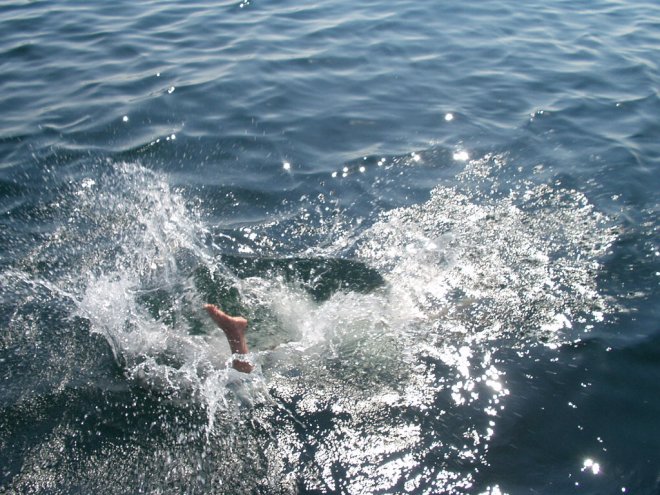 “You’re shivering,” I remember her saying. “Are you cold? If you’re cold I’ll bring you in but Im not bringing you in just because you’re scared.”
“I’m FREEZING!” And that’s when I learned how to lie, because she promptly brought me back to shore.
And that was the beginning of years of me being terrified of any kind of water activity. My mother finally brought me to New England Divers for special remedial classes for kids who feared the water. A pretty curly haired young woman who in my memory looks so much like I did myself at that age, she taught me not to worry about the water. I could hold onto the edge, I could do whatever I wanted to do to feel safe. I didn’t go anywhere I didn’t want to go. I could do what I wanted, and she was just there to help me and to show me stuff.
Now at 58 years, swimming has been a HUGE part of the big joy of my life, swimming across Casco Bay in Maine, off the many islands, snorkling through the thousands of miles my husband and I have sailed, thru the Virgin Islands. Puerto Rico, the Bahamas, the East Coast, Cape Cod! What a world flows through my arms when I swim, which I do strictly for meditative purposes at a rate of three miles a week at the Y.
So my emotions have changed completely regarding the water. Yes, of course emotional learning can happen. If only I knew the name of the New England Divers teacher who helped me recover from my fear, I’d love to let her know how she is a heroine of my life. I think of her so often, with amazement at how her few lessons in a swimming pool truly changed the entire course of my life. Of course, all my companion swimmers also, so many who’ve contributed to my emotional courage that makes possible all the amazing swimming adventures of my life.
Emotions can change! But you really can’t learn when you are upset, overly excited, scared or not feeling well.
Dogs are not so good at abstract reasoning. Their brains work a bit differently than ours do, but emotionally, they are very similar! They can feel upset, or confused or frustrated. They can be over the top excited.
A dog doesn’t have to be displaying big emotions to be experiencing them. Dogs often hide their injuries, they act “stoic,” maybe because displaying weaknesses is not a survival skill. Because somewhere along the way, some dogs, learn to lie. So we know some dogs that show emotion by shrinking very slightly. Instead of barking, yapping in reactivity, their reactions look like they just freeze up a bit. The dog becomes still, withdrawn, maybe depressed looking, sad, freezing or shrinking slightly or entirely away, often in a sort of slow motion. I know some people who can react that way too.
Thanks for posting any comments here on my blog rather than on FB where your comments get lost! Don’t make me cry! But we need each other’s help to heal our emotions, it’s very hard to do that by yourself. I used to have really terrible stage fright. I cried on stage in 6th grade, when I was put in “over my head” on stage! So don’t put your dog or yourself in “over your head.” And thanks to many teachers I don’t have stage fright anymore.




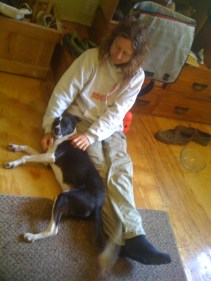
 Resource guarding is the dog saying “Stay away!” It might mean stay away from my bone, my pups, my corner of the room, my human. It’s one of the most common behavioral problems I see, but fortunately one that is highly responsive to training.
 This is why trying to pick up and control all potential triggers often fails. You can’t eliminate every possible resource in the environment. When you limit some resources, you’re making every other resource in the environment seem more important, MORE valuable, and this has potential to escalate things a dog may choose to guard. We will never be “done” with our mission to prevent development of resource guarding in all of our dogs. Behavioral health requires a sense of resource security throughout the lifespan.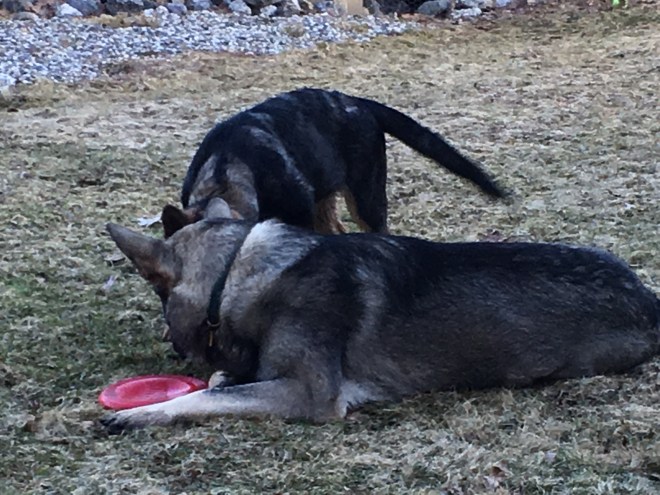
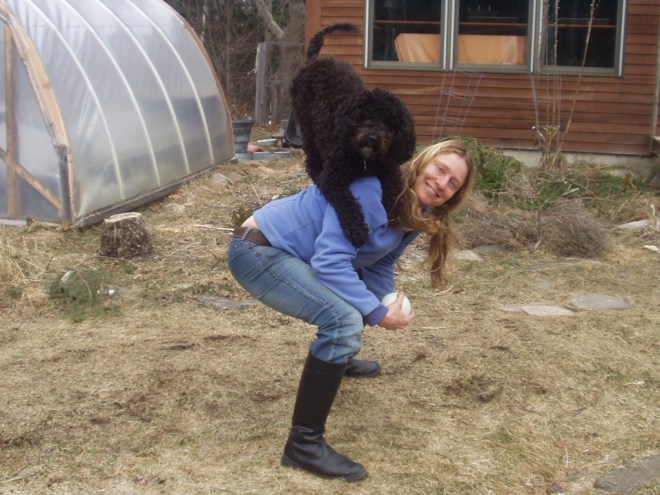 Punishment creates unpredictable variable results over the long term. Some dogs (typically mature dogs who already understand many behaviors and have a confident relationship with their handlers) might actually learn to leave the horse alone. But other dogs seem to be hard as nails. Pet owners might say, “he doesn’t even feel it.” Puppies might be completely confused, have no idea how to avoid the pain and become emotionally damaged. Think of animals who’ve learned to chase cars, or hunt porcupines, and they keep chasing cars and hunting porcupines in spite of having been run over and quilled repeatedly. Sometimes this isn’t because they’re tough, but they don’t associate their disaster with their fun. But let’s assume that your dog does associate the shock or prong or punishment with you or your commands (or your yard). How might that effect your dog’s behavior over the long haul of the next weeks and months and years?
 4. Tick tubes x 3! Spring, midsummer and again in the fall. Due to travel, we bought our first batch of tick tubes and installed them in the spring. Expensive! For round two, I have saved toilet paper tubes. I put cotton balls in a big ziplock bag, spray sawyers permethrin into the bag (while wearing disposable gloves). When cotton balls are saturated, I lay them on a board in the sun to dry, then I put them in tp tubes and stuff them around where rodents play. They take the cotton balls to line their nests, and this kills the ticks in the nests. You’re welcome, mousies!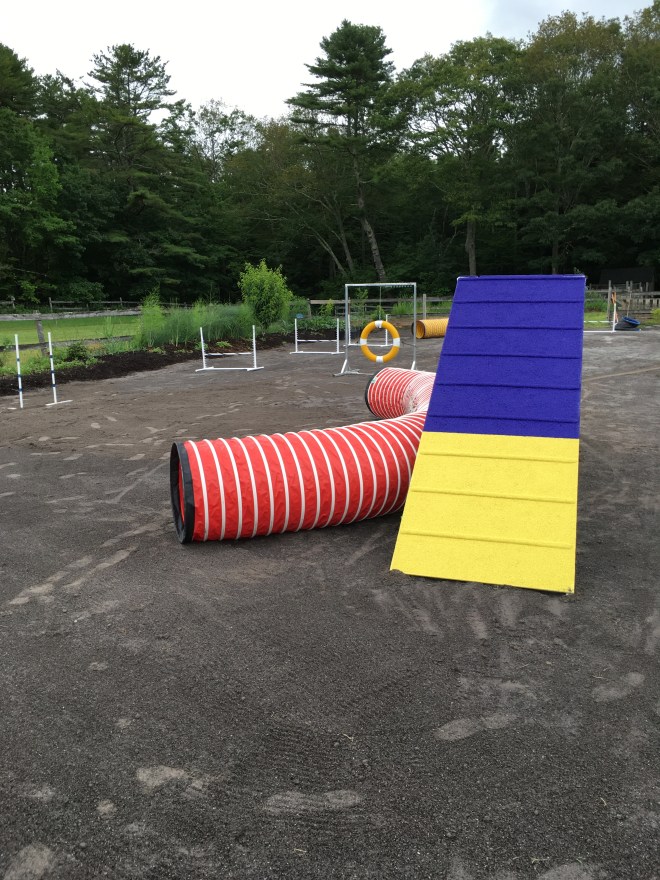
 By Jenny Ruth Yasi, Head Trainer Whole Dog Camp
 In behavior science terminology, Reinforcement (R) and Punishment(P) are functions or “consequences” that either strengthen(R) or weaken(P) behavior.
 When my dog breaks a sit or a down, I avoid a re-cue. Instead I can deliver a “release signal” (“okay! all done!”) which leaves her wanting more. WHAT?! The game is over? Let me try again!
 The best way to evaluate what size, coat color and behavior traits will be like as an adult is to choose an older puppy. It’s almost impossible to evaluate how a “breed unknown” 8 or 10 week old puppy will mature, but it’s even harder to know what size or shape a pup will grow up to be if you aren’t certain about the puppy’s age. If you adopt a 6 week old puppy believing it is a 10 or 12 week old puppy, you are likely to wind up with an adult dog who is MUCH larger than you expected. So I will try to find a puppy where the actual date of birth is known. If I select a BIRTH DATE KNOWN 8 or 10 week old puppy who is between 8 and 15 lbs, my adult dog is likely to grow into the “medium” size range than I am hoping to adopt.
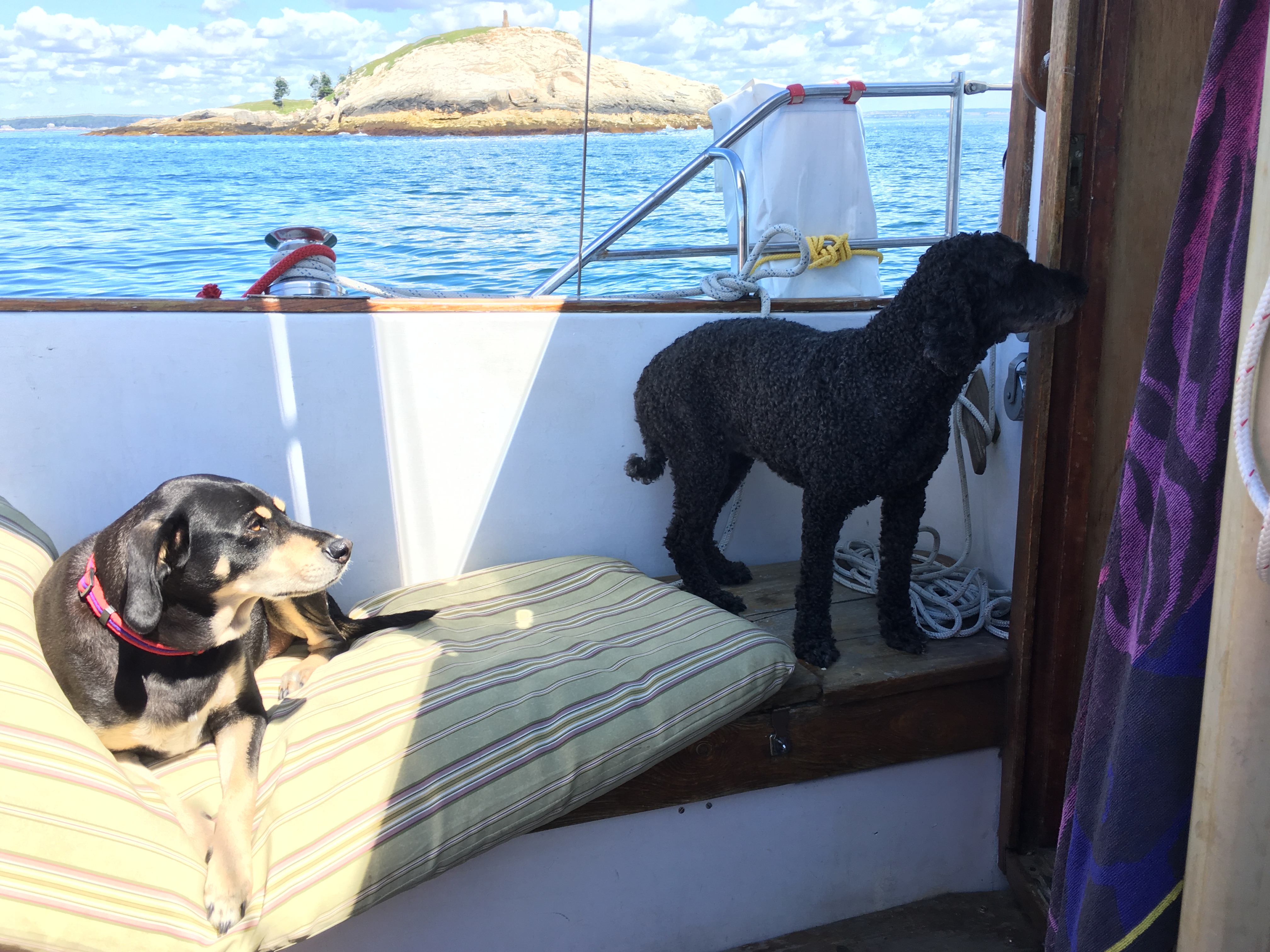 We travel with our dogs, to competitions, festivals and educational events, via boat and plane and car. Of the many tricks they do, one that I am often asked about is , “You get them to “go” on the boat? How did you do that?!”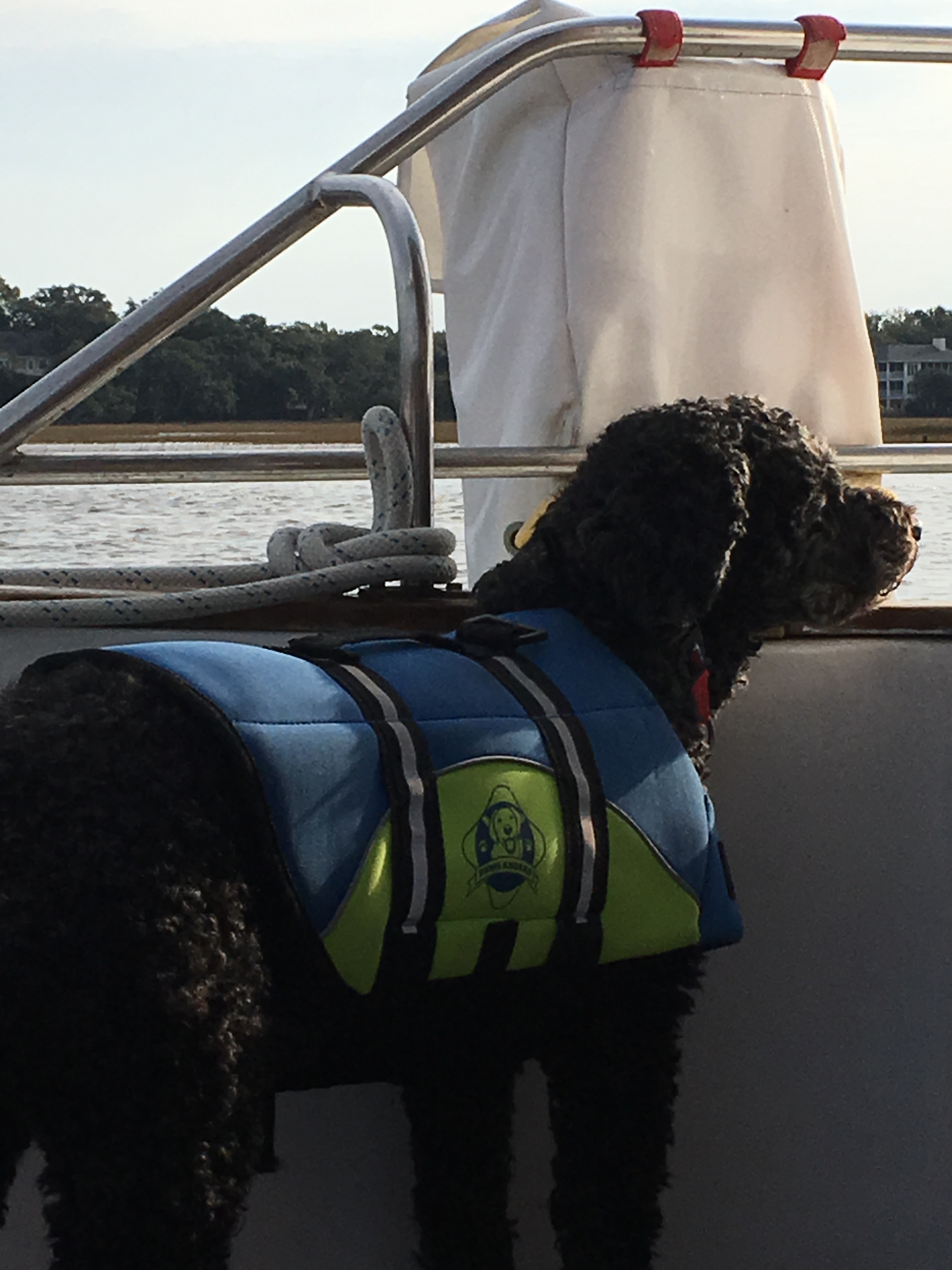
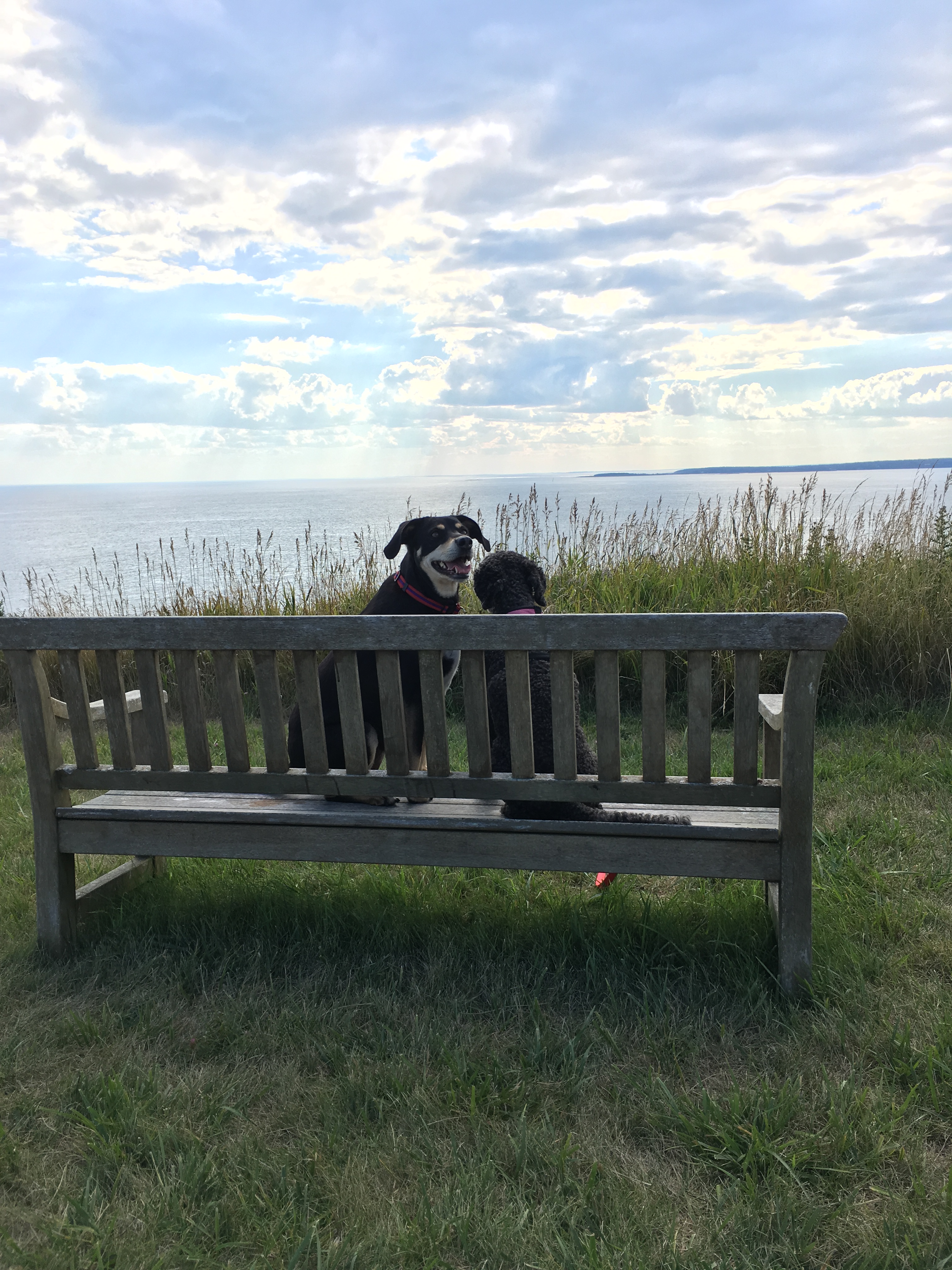


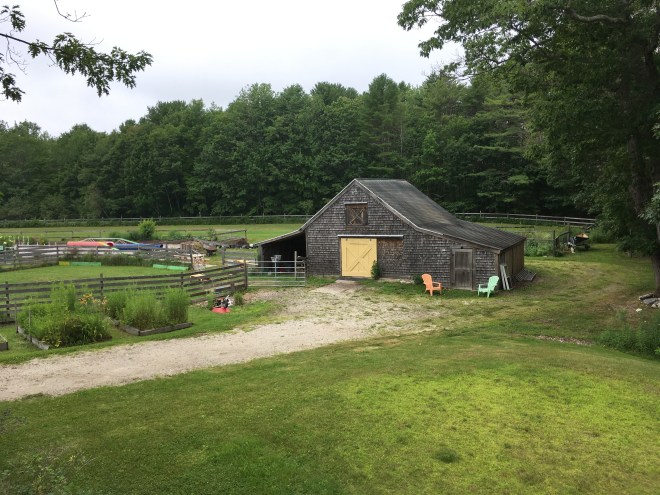
 at Bliss Woods Farm in Freeport, Maine