
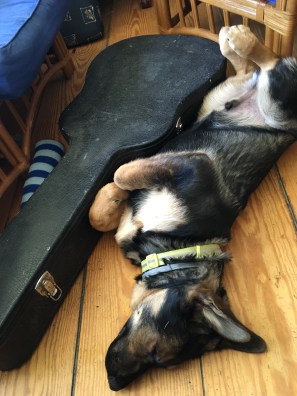
“Resource guarding” is aggression that occurs around a dog’s possessions. The possession might be a food dish, dog bone, a soft space on the couch, or it could even be YOU. I once had a guest dog who would find a recently cleaned spot on the rug, and he would resource guard THAT! It’s the opposite of what we want, which is a relaxed attitude, a dog who isn’t worried about anything.
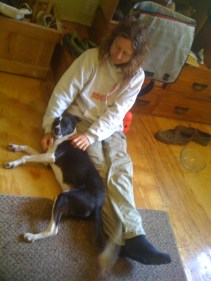
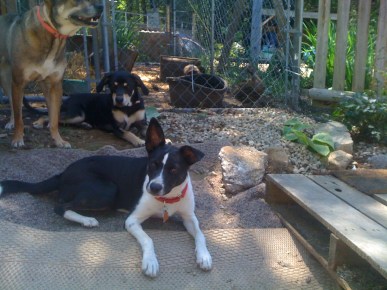 Resource guarding is the dog saying “Stay away!” It might mean stay away from my bone, my pups, my corner of the room, my human. It’s one of the most common behavioral problems I see, but fortunately one that is highly responsive to training.
First off: Why do dogs do this? Like almost all aggression, resource guarding typically starts as insecurity, and a lack of confidence, a dog who can’t predict what’s going to happen with a resource. Over time the dog can come up with his own plan for controlling resources, and this can develop into increasing aggression. Some dogs might be genetically more prone to this. I saw a puppy once that was scary aggressive, resource guarding at 16 weeks, and I was told euthanized by 6 months. Something was wrong with that pup. But that is very rare. Far more typically, resource guarding is triggered by the environment, regardless of genetics. Resource guarding is almost always a learned behavior. The dog has learned to act aggressively, because it allows them to control access to limited valuable resources.
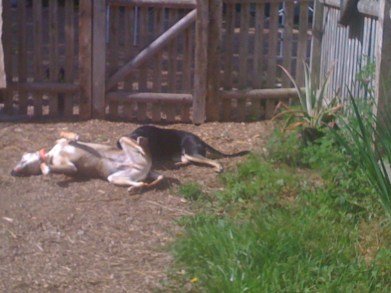 This is why trying to pick up and control all potential triggers often fails. You can’t eliminate every possible resource in the environment. When you limit some resources, you’re making every other resource in the environment seem more important, MORE valuable, and this has potential to escalate things a dog may choose to guard. We will never be “done” with our mission to prevent development of resource guarding in all of our dogs. Behavioral health requires a sense of resource security throughout the lifespan.
When you’ve flooded your environment with other resources, the stinky spot on the rug doesn’t stand out so much. So that’s one way of approaching the problem. Rather than handing out one ball in a group of 6 dogs, dump out 24 balls. Begin with balls just laying there, don’t throw them right off the bat! If it looks like one dog is experiencing a ball shortage, dump out MORE balls. The idea is to have so many balls, no dog needs to worry about balls. Ignore the balls, don’t touch the balls, let the dogs do what they want. Add more balls as necessary. Do the same if you pass out dog bones or treats. I remember spending $30 on 12 dog bones once, but it was super worthwhile!
I’ve seen dogs learn how to relax, again and again, in resource flooded environments. The resource guarder will likely collect items: maybe six tennis balls, plus two bones and a rag, but then they start to settle down and feel foolish because none of the other dogs cares a bit about what they’ve got. All the other dogs have what they need and they aren’t bothering the resource guarder. What does this tell you about the world?! I don’t know, but maybe something!
These ideas are not necessarily a prescription, but reflective of experiences I’ve had with dogs who stay with me. As an old friend used to say to me when talking about beekeeping, “you need to think like a bee!” The same thing is true regarding resource guarding in dogs. We have to think of how we would feel if someone came and took our iphone out of our hands! Fortunately, dogs don’t care about iphones! 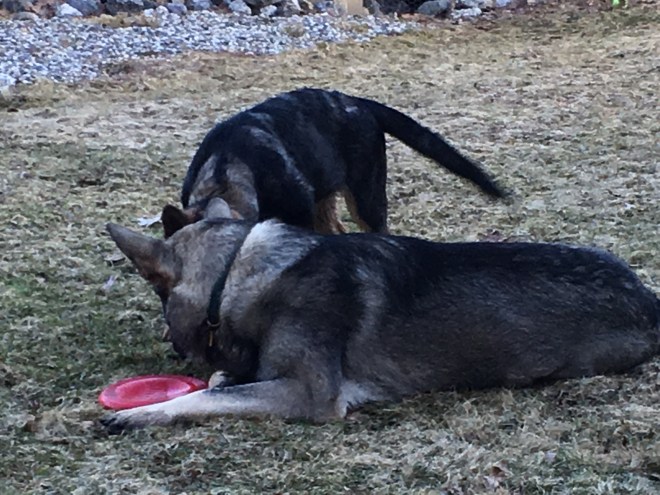
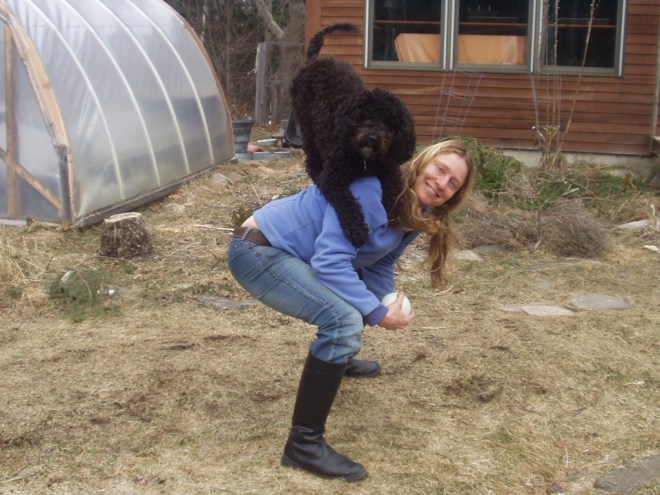 Punishment creates unpredictable variable results over the long term. Some dogs (typically mature dogs who already understand many behaviors and have a confident relationship with their handlers) might actually learn to leave the horse alone. But other dogs seem to be hard as nails. Pet owners might say, “he doesn’t even feel it.” Puppies might be completely confused, have no idea how to avoid the pain and become emotionally damaged. Think of animals who’ve learned to chase cars, or hunt porcupines, and they keep chasing cars and hunting porcupines in spite of having been run over and quilled repeatedly. Sometimes this isn’t because they’re tough, but they don’t associate their disaster with their fun. But let’s assume that your dog does associate the shock or prong or punishment with you or your commands (or your yard). How might that effect your dog’s behavior over the long haul of the next weeks and months and years?
 Those of you who have been coming and playing at Whole Dog Camp can confirm that we aren’t finding ticks on the property. How do we do it? Let us count the ways (again)!
 4. Tick tubes x 3! Spring, midsummer and again in the fall. Due to travel, we bought our first batch of tick tubes and installed them in the spring. Expensive! For round two, I have saved toilet paper tubes. I put cotton balls in a big ziplock bag, spray sawyers permethrin into the bag (while wearing disposable gloves). When cotton balls are saturated, I lay them on a board in the sun to dry, then I put them in tp tubes and stuff them around where rodents play. They take the cotton balls to line their nests, and this kills the ticks in the nests. You’re welcome, mousies!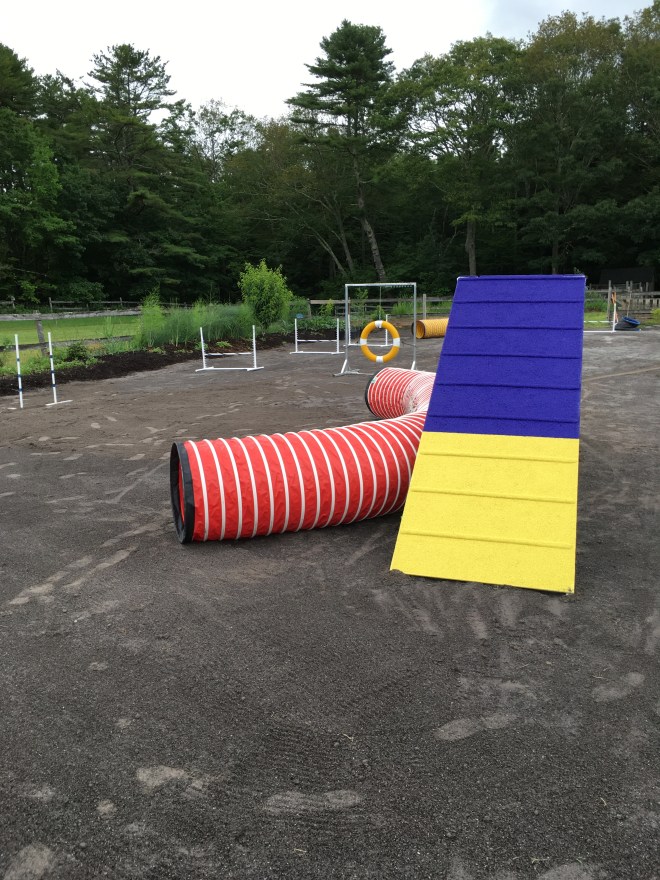
 By Jenny Ruth Yasi, Head Trainer Whole Dog Camp
 In behavior science terminology, Reinforcement (R) and Punishment(P) are functions or “consequences” that either strengthen(R) or weaken(P) behavior.
 When my dog breaks a sit or a down, I avoid a re-cue. Instead I can deliver a “release signal” (“okay! all done!”) which leaves her wanting more. WHAT?! The game is over? Let me try again!
 The best way to evaluate what size, coat color and behavior traits will be like as an adult is to choose an older puppy. It’s almost impossible to evaluate how a “breed unknown” 8 or 10 week old puppy will mature, but it’s even harder to know what size or shape a pup will grow up to be if you aren’t certain about the puppy’s age. If you adopt a 6 week old puppy believing it is a 10 or 12 week old puppy, you are likely to wind up with an adult dog who is MUCH larger than you expected. So I will try to find a puppy where the actual date of birth is known. If I select a BIRTH DATE KNOWN 8 or 10 week old puppy who is between 8 and 15 lbs, my adult dog is likely to grow into the “medium” size range than I am hoping to adopt.


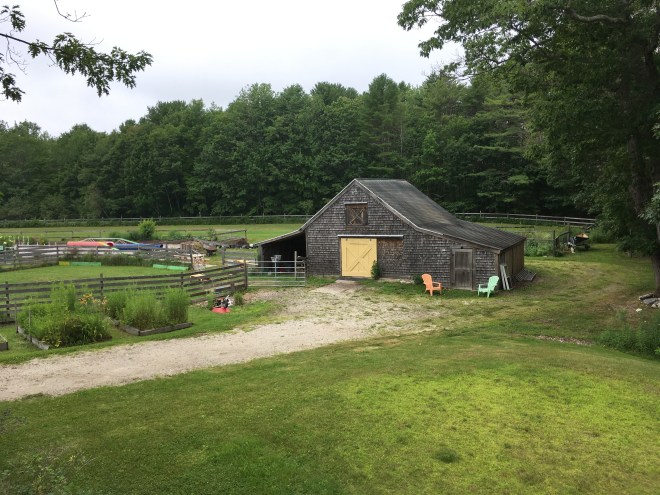
 at Bliss Woods Farm in Freeport, Maine