

I deliver and control “go sniff”opportunities much like I control food treats. I give “go sniff” to reinforce my dogs for paying attention to me.

If your dog loves to sniff, stop viewing this as a problem! The interest in sniffing around isn’t just a “distractions,” it’s a very affordable (free!) reinforcement that you can harness and deliver to reinforce behaviors that you like.
How? You put the opportunity to “go sniff!” on cue, and then deliver it, regularly, generously, as a reward for behaviors that you like. There is one little trick to it though, and the trick is that your dog needs to know and trust that you are going to deliver these “sniff” opportunities. Imagine if your dog was starving and didn’t know that you were going to feed him. That’s the sort of behavior you might get from a dog who needs to sniff and doesn’t know that you are going to give him all the sniff he needs.
I’d been doing giving my dogs “go sniff” opportunities for quite a while, before I started to really understand what was happening and what a gold mine of reinforcement I now had at my disposal. My eye-popping awakening came at an AKC rally and obedience run-through event, held in a huge barn/indoor arena. The facility owner told me they regularly had horses in there and “normally, we keep chickens in the corner.” They might as well have built the whole facility out of hotdogs, as far as my dog was concerned! My young dog was much too excited to eat treats, and so I settled him on his mat and watched competitor after competitor walk in with distracted, scent aroused dogs, take a look around and leave, saying things like, “not today!” and “I don’t think so!”
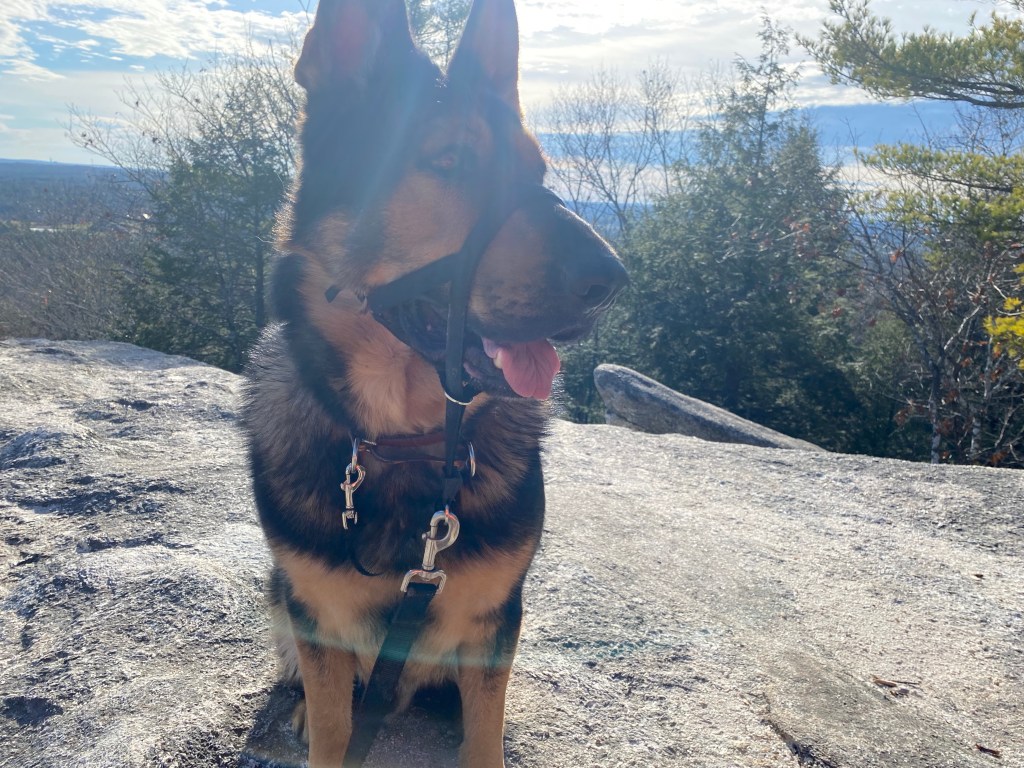
I started to warm up my dog. I gave him a sit cue, and then rewarded it as he had hoped, with a limited sniff opportunity.
Whenever I deliver a “sniff” reinforcement, I deliver it in bite size pieces, just as I do with hotdogs. My dog is on a six foot leash and I remain stationary until he’s done sniffing that limited area, and looks up at me for his next cue and reinforcement opportunity.
I always ask for a stationary behavior before delivering sniff reinforcement, to help make it really clear, that he’s getting sniff as a reward, so we heeled up to each aromatic corner of the barn. I delivered a “sit” cue, and walked around my dog, and then rewarded with “okay, sniff!” I stand in one spot, holding his six foot and let him sniff til satiated. When he looks at me, yay, off we go to the next corner, where I ask for some behavior ( “sit/down/stand” ), then reward with “go sniff!or whatever trick I want, then head to his mat for a food treat. Earning “sniff” makes it much easier for my dog to appreciate the value of earning “food.” When you are trying to feed a dog who wants to sniff but can’t, your food is worth nothing. Adding “go sniff” to your toolbox makes your food more valuable!
But with my hundred pound Czech bred German Shepherd, the cost of food reinforcements can be substantial, and there I was, discovering that all I had a literally limitless supply of completely free, non-fattening reinforcement!
Previously, I had been using “sniff” opportunities to teach loose leash walking. I used telephone poles and fire hydrants, along with a little food in between, which resulted in a somewhat variable delivery of reinforcement to nice leash walking behavior. It’s important to make a clear delineation between the end of cued performance and the beginning of the reinforcement opportunity, so I always ask for a stationary behavior, or at least some hand targets, before I deliver “sniff!” We w heel, walk trott, and come to a halt near a potentially smelly spot. Fire hydrant! Today, I might cue another few behaviors, maybe sit pretty, hand targets and then reward with “go sniff!”
Head halter training makes it much easier to put “go sniff” on cue, while on a harness, it might be difficult to encourage your dog with his head off the ground, he might be sniff grazing constantly, and when that is the case, sniffing opportunities are often reinforcing the dog for dragging people on the leash. Head halters allow me to deliver “sniff” opportunities to reinforce behaviors I love. See my head halter playlist for more information on that. (see https://youtube.com/playlist?list=PL1E6379E57F518AF0 ).

But even if you have a tiny dog who doesn’t need a head halter, you can teach your dog to respond to sniff reinforcement the same way they respond to hotdog reinforcement. Rather than ignoring or pestering your dog when he is sniffing around, you need to anticipate his interest and start controlling and delivering “sniff” opportunities the same way you control and deliver food: intentionally, not accidentally, and immediately after behaviors that you LIKE. Here’s a video of me doing that with Tigerlily quite a long time ago: https://youtu.be/fcgM4Bxb20k
As time has gone by, my dog has learned to glance towards things he would like to sniff, and then he look back at me, hoping I will give him an opportunity to earn the sniff. When I let him off-leash, I often say, “okay, go sniff!” and I think of those times as being his “sniff-meal” times, similar to the way he experiences food-meal times. He doesn’t ALWAYS have to work for sniffing reinforcement!
But when you use sniff as reinforcement, it means you really need to pay attention to your dog. You need your dog to trust that you understand what they want, and you will deliver. When your dog trusts you, they can ignore smelly sniffy stuff the same way they can ignore a bowl of meat on the floor, confident that you are going to deliver, and they don’t need to steal it.
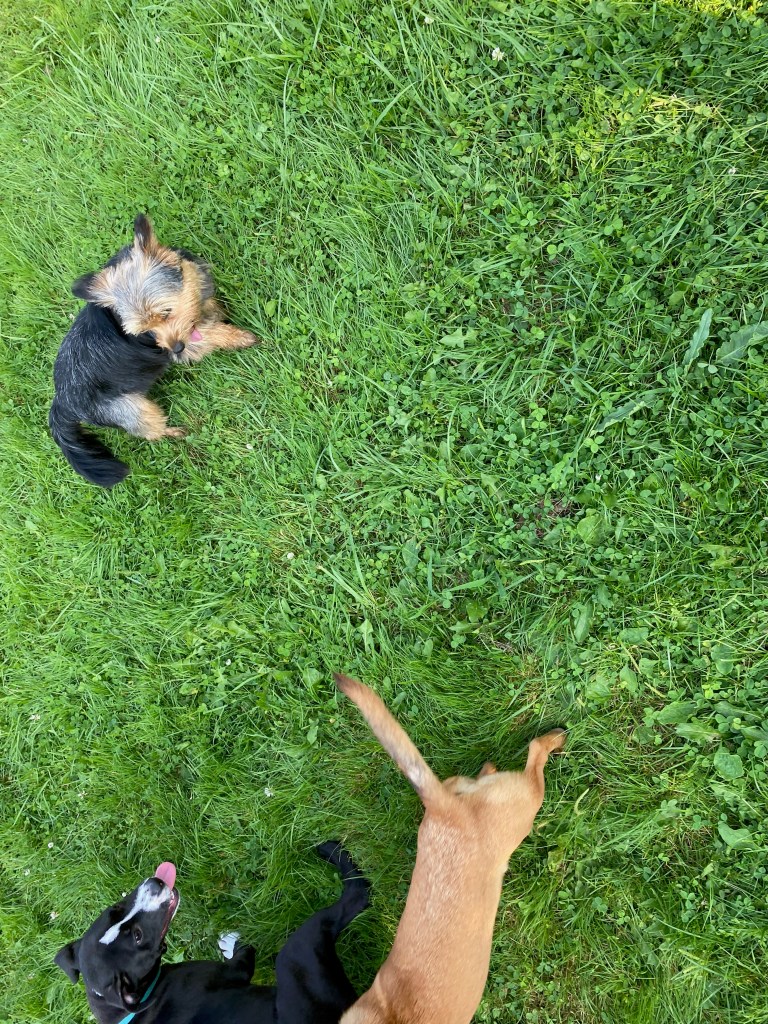
Whole Dog Camp Lead Trainer Jenny Ruth Yasi, BFA, major in Behavior Science and Character Development, is a Certified Professional Dog Trainer (CPDT-KA) and Fear Free Certified Professional (FFCP Trainer),a Certified Control Unleashed Instructor (CCUI), and a Certified Trick Dog Instructor (CTDI). She sits on the Ethics and Legislative Committees of the Association of Professional Dog Trainers.


 Resource guarding is the dog saying “Stay away!” It might mean stay away from my bone, my pups, my corner of the room, my human. It’s one of the most common behavioral problems I see, but fortunately one that is highly responsive to training.
 This is why trying to pick up and control all potential triggers often fails. You can’t eliminate every possible resource in the environment. When you limit some resources, you’re making every other resource in the environment seem more important, MORE valuable, and this has potential to escalate things a dog may choose to guard. We will never be “done” with our mission to prevent development of resource guarding in all of our dogs. Behavioral health requires a sense of resource security throughout the lifespan.
 at Bliss Woods Farm in Freeport, Maine