Punishment happens (and why Punishment isn’t “bad” and Reinforcement isn’t “good” )

We’re going to define “punishment” and “reinforcement” here because it’s most likely not what your grand-dad told you. It also might not be what your balanced trainer thinks it is. And if you really understand the four quadrants, you’ll be able to use them all four without intentionally adding fear, pain, stress or forced suppression of problem behaviors any part of your strategy to teach and handle dogs.

I am a certified Fear Free Professional Trainer, Certified Control Unleashed Instructor, and originator of the Signal training program, and I don’t use ecollars, prong collars or slip leads, I don’t use “pressure” to train dogs, but I do understand and consider the functions of all four quadrants (Negative and Positive Reinforcement, Negative and Positive Punishment) in training dogs.

Positive Reinforcement – something added right after a behavior (like a cookie after a sit) that causes that behavior of sitting to get a cookie to strengthenNegative Reinforcement – something removed right after a behavior (like taking off the leash right after a sit) that causes the dog’s behavior of sitting to get the leash removed to strengthen
Positive Punishment — Something added right after a behavior (a leash is put on a dog who is pestering another dog) that causes the pestering behavior to stop or weakenNegative Punishment— something removed right after a behavior (a toy is put away right after the dog bites or barks at the handler) that causes the biting and barking behaviors to stop or weaken

I love the term “fear free,” (rather than “all positive,” or “force free”) because that’s the more accurate description of how I approach training. I don’t view the quadrants judgmentally, as though “Positive Reinforcement” is better than “Negative Reinforcement.” These are behavior science terms and we can’t entirely avoid any of the four quadrants (R+, R-, P+, P-), nor extinction. Saying you are “all positive” would be like saying you are a mathematician who only adds. We need to apply our understanding of all four quadrants in order to create the effective and efficient behavior equations we desire. But we don’t need to add pain, fear, or stress. And reinforcement and punishment are not the only things that strengthen or weaken behaviors. The environment (including us), the “antecedent arrangements” help to set up the behavioral options that animals choose from.

I let AI write the definition: Antecedent arrangement is a behavior modification strategy, especially in animal training, that involves designing the environment (antecedents) before a behavior occurs to make desired actions easier and unwanted actions less likely, essentially setting the animal up for success by controlling cues and context, rather than reacting after the behavior happens. It’s a proactive approach, manipulating distant (environment) or immediate (cues, objects) factors to influence choices, making the ‘right’ behavior the easiest option. 

But here, lets focus on the quadrants and my point that you might need to add or subtract something in a way that punishes (weakens) undesirable responses, but it doesn’t need to (and should not, for reasons I explain below) hurt, scare, or stress your dog.

Recently I punished Maggie’s refusal to come when called by going inside and leaving her outside alone (that’s Negative Punishment. She wanted me to stay outside and play with her). Two minutes later, I restored her option to come in. She RAN to rejoin me, and I reinforced that.

Quickie background for those new to behavior science: “Positive” and “negative” doesn’t mean good and bad. Positive literally refers to something added such as a physical sensation, environmental or social opportunity, warning or threat, or a physical thing. Punishment or reinforcement weakening or strengthening functions) manifest from our choices of these things added or subtracted, and they must take place immediately after or in direct association with the target behavior. We might add food or heat or a ball or another dog (or me) or we might take any one of those things away.

If your dog wants the thing to be added or taken away, this functions as reinforcement, strengthening the behavior it follows. The dog learns “doing this got (or got rid of) that. I can do this, when I want/or want to get rid of, that.” Reinforcement strengthens behavior very predictably, because your dog is working to get the reinforcement as though it’s the pot of gold at the end of the rainbow: you know where the dog is going. When you see a strong behavior in a dog, ask yourself, “what is the dog working to achieve?” If you don’t like the behavior, can you lay out a better route for the dog to achieve the same thing? Can you put the pot of gold at the end of a different rainbow?

Punishment weakens behaviors. Animals seek to escape or avoid punishment, and they might escape by a zillion different ways. They might cooperate to make punishment stop, or they might get depressed and shut down, they might react aggressively, they might run away, they might stop trying, they might try many different strategies to escape or avoid punishment. They might react to punishment differently each time it occurs. This is why the results of punishment are far less predictable than the results of reinforcement. It’s difficult to see behaviors or potential behaviors weakening or disappearing, and we might not recognize that something is punishing a behavior that is barely happening, but it’s easier to notice escape, avoidance (or refusal) behaviors. Escape and avoidance often reveal unintentionally punishing experiences that dogs connect to the behaviors they are avoiding.

For new pet families especially, both punishment and reinforcement frequently happens by accident, unconsciously. People deliver both almost like they are nervous ticks. Here’s a cookie for no reason, and here’s a reprimand because the handler is embarrassed. Or people follow a behavior with something they think the animal should like, but doesn’t. Of they follow a problem behavior with something the animal shouldn’t like, but does!
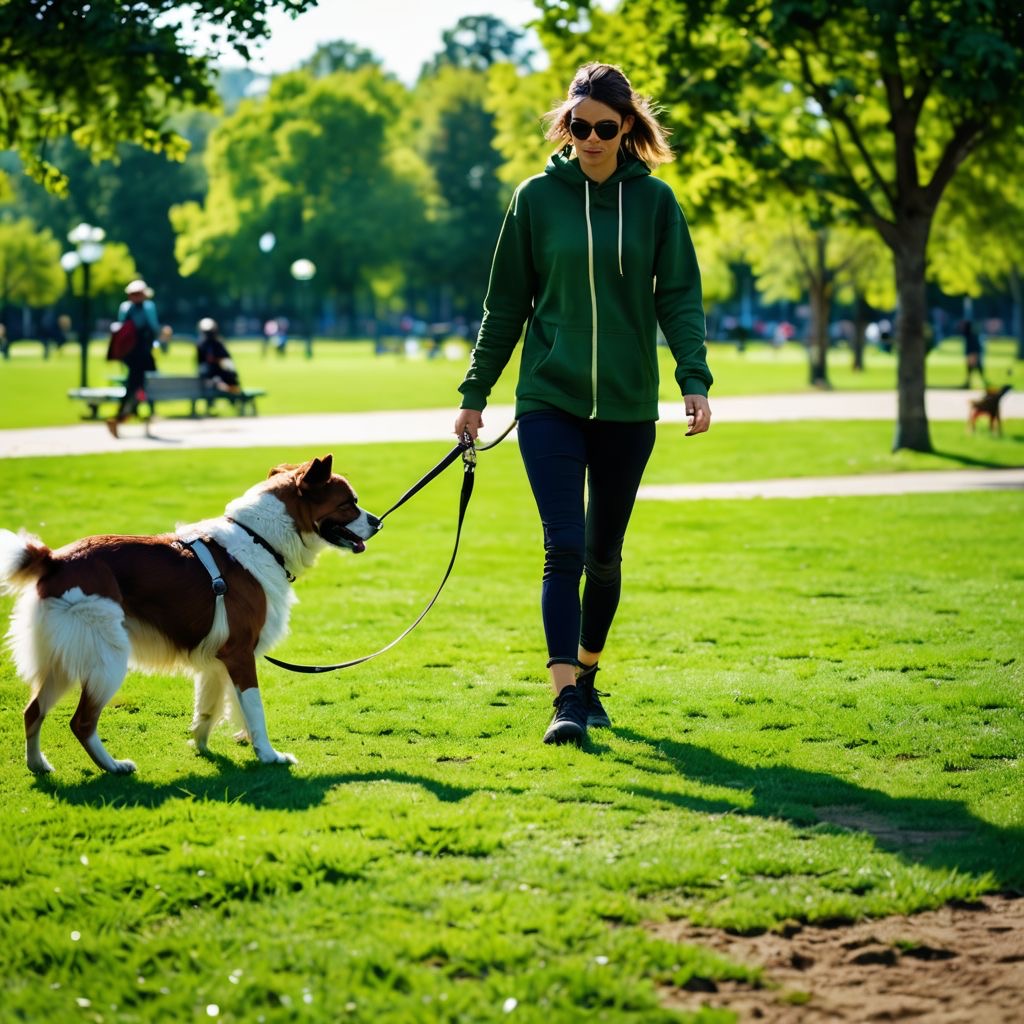
1. Putting on the leash and leaving the dog park might unintentionally punish (adding a leash and removing access to freedom and friends) the dog’s behavior of coming when called at the dog park. We can compensate for unavoidable punishment by being aware, and adding food, toy entertainment or other prizes, and following most reinforced recalls with returning to play) . 2. Every time you open the door and let your dog outside, you are delivering negative and positive reinforcement (taking away a barrier plus delivering freedom) that strengthen behaviors the dog was doing when you said, “okay! go!”

Consider a behavior I sometimes dislike: barking. I do require alert barks and so I put both “speak” and “ssh” on cue, using positive reinforcement (added food and attention). We practice and grow the response around distractions.

But when problem barking doesn’t stop, I can punish it by taking away a privilege. Overly excited barking dog goes behind a gate, into a crate or car, or we can move further away from whatever is stimulating the behavior. Losing a desired privilege weakens the behavior it follows. When the dog stops barking, I can give back the privilege. It’s not all or nothing, I can add and subtract incrementally, according to what the dog and I both need.

One year ago I was gifted a 2.5 year old border collie, Maggie. She came with some scary behaviors, and she went absolutely bonkers at people who came in the house. I popped her into her normally beloved crate with a bone. At first she screamed and smashed around inside the crate, even when I was shoving cheese in there. So that was, sadly, positive punishment (adding confinement), and also negative punishment ( freedom taken away ).

But I wasn’t angry. I wasn’t hurting or scaring her. I was apparently pissing her off, and she was not accustomed to being told what to do but this (and medication for two months) reduced the stimuli that was reinforcing barking. Maggie learned aggressive behaviors resulted in lost privileges. At first, when she kept barking in the crate, I covered her crate with a blanket (further reducing visual stimuli, depriving her of her view of our house guests). It’s often true that aggressive dogs want that opportunity to aggress. It can be fun, satisfying (reinforcing) to scream and scare scary things away. Animals might also enjoy looking things that frighten them. They don’t always run away from them, sometimes they focus on them, curious, eager to intimidate and scare those scary things aways.

When I took those desired options away in response to barking (that’s punishment) Maggie’s mad-dog barking behavior rapidly weakened and stopped. I reinforced each increment of her “calming down” behaviors by incrementally giving those options back: removing the crate cover (positive reinforcement! you can quietly look at the scary people from a safe place) the instant she stopped barking. I taught Maggie that a muzzle comes with added privileges (reinforcement) and so she didn’t try to escape or avoid the muzzle. Now quiet, much calmer, I muzzled her and Maggie came out and socialized, collecting reinforcement she was hoping for (satisfying curiosity and reassuring herself) without intimidating guests. Quickly she was showing off lovey-dovey behaviors, so I negatively reinforced that by removing the muzzle. The positively reinforced her with treats and love.

It took Maggie almost one year to grow her belief that being calm and lovey-dovey is the most reliable way to get what she wants. She has turned into such a sweet dependable, trustworthy dog. I honestly can’t believe how much she has changed in just one year! I guess I WILL be getting back into agility! She loves it!
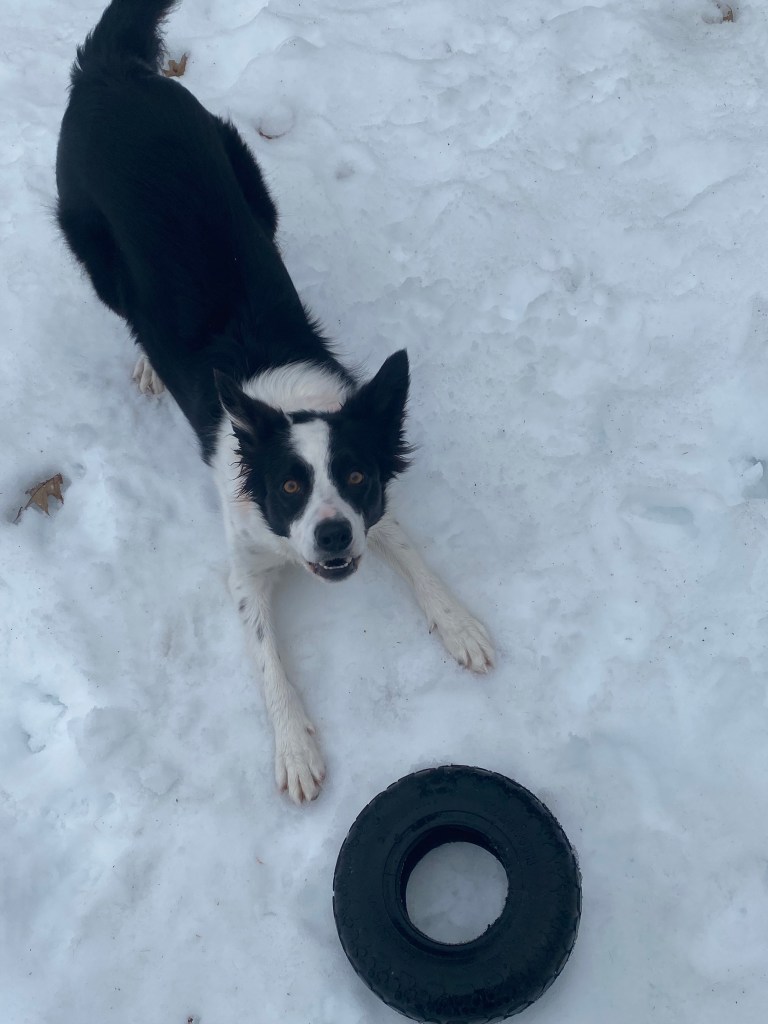
So of course Fear Free trainers can use all the quadrants, and we do so without hurting, frightening or intentionally stressing dogs.

But punishment is not something a dog chooses. Maggie loves her crate but she doesn’t love it when we have company and she needs my permission to get out of it. Animals don’t work to get paid with punishment. Punishment is a disappointment. It can be frustrating, irritating, like going down a dead end road, or hitting a traffic jam or seeing someone else take your job. Animals don’t like punishment and they will find or create work-arounds to avoid punishment. It’s up to us to teach them the road to reinforcement, or else their work arounds might be more of a problem than whatever behavior you thought you were punishing.

Yelling, spanking, hurting, or scaring animals (or humans) might not, from a behavior science perspective, even qualify as punishment! Hurting, intimidating or frightening a dog might not only fail to weaken a behavior, just like traffic on the highway doesn’t stop people from driving to work. Pain, fear or frustration can unintentionally build problem behaviors as animals become motivated and reinforced by their success in defending themselves from punishment.

The way the reinforcement and punishment functions is not intuitively obvious for everyone. Think of bite sports, where handler assistants wack and yell at the dog, delivering what dogs perceive as “fun” to positively reinforce dogs for jumping up and biting. That’s right. Getting yelled at, wacked and shoved around can reinforce behaviors. Many dogs will jump all over you to get it. Dogs might even love your adorably inflamed tone of voice. Or think of dogs whose “escape artist” behaviors grow stronger as they discover the joy of playing keep away from screaming humans, having a great time and especially enjoying the bit when the human is losing their game.

In my experience, use of ecollars, prong, slip lead or any sort of choking makes for less happy, more frustrated, sharper and less predictable behaviors in dogs. Dogs often don’t learn what people hope they will learn from aversives.

If an adult dog bites my hand when we are playing a toy game, I immediately end the game, put away the toy, and walk away while making a new training plan. I’m not mad, I’m not hurting, scaring or yelling at the dog, but I am punishing the dog’s behavior of biting my hand. The dog doesn’t want me to end the game. He doesn’t want me to walk away. So he is careful to avoid biting me again.

Some people get mad or frustrated with their dogs, but they don’t change the consequences for the dog. The game continues. It’s very common for pet caregivers to unconsciously punish and reinforce the very same behaviors. They reprimand the dog, yet they keep on playing! This can make dogs neurotic, anxious, and more likely to fail.

Punishment isn’t bad and reinforcement isn’t good. But doing both unconsciously is bad. Clarity is good. Feeling safe is good.

Reinforcement and punishment are constantly influencing behaviors in often unrecognized ways. Watch behaviors that are growing: whatever happens immediately after (or sometimes during) the behavior is reinforcing it. Watch what happens immediately before escape or avoidant behaviors: that behavior is being punished somehow

Just because you didn’t want to punish your dog’s behaviors doesn’t mean it doesn’t happen. We need to notice and manage all of it to protect and grow our dogs’ most desirable behaviors.
Jenny Ruth Yasi is author of “Signal Training: Leading to Freedom: Head halters, Muzzles, Calming Caps and Tricks for Safer Loose Leash Walking,” available on Amazon, and Barnes and Noble.

https://a.co/d/8mVAE6w: Punishment happens (and why Punishment isn’t “bad” and Reinforcement isn’t “good” )

Putting “Go Sniff!” into your reinforcement toolbox

I deliver and control “go sniff”opportunities much like I control food treats. I give “go sniff” to reinforce my dogs for paying attention to me.

If your dog loves to sniff, stop viewing this as a problem! The interest in sniffing around isn’t just a “distractions,” it’s a very affordable (free!) reinforcement that you can harness and deliver to reinforce behaviors that you like.

How? You put the opportunity to “go sniff!” on cue, and then deliver it, regularly, generously, as a reward for behaviors that you like. There is one little trick to it though, and the trick is that your dog needs to know and trust that you are going to deliver these “sniff” opportunities. Imagine if your dog was starving and didn’t know that you were going to feed him. That’s the sort of behavior you might get from a dog who needs to sniff and doesn’t know that you are going to give him all the sniff he needs.

I’d been doing giving my dogs “go sniff” opportunities for quite a while, before I started to really understand what was happening and what a gold mine of reinforcement I now had at my disposal. My eye-popping awakening came at an AKC rally and obedience run-through event, held in a huge barn/indoor arena. The facility owner told me they regularly had horses in there and “normally, we keep chickens in the corner.” They might as well have built the whole facility out of hotdogs, as far as my dog was concerned! My young dog was much too excited to eat treats, and so I settled him on his mat and watched competitor after competitor walk in with distracted, scent aroused dogs, take a look around and leave, saying things like, “not today!” and “I don’t think so!”

I started to warm up my dog. I gave him a sit cue, and then rewarded it as he had hoped, with a limited sniff opportunity.

Whenever I deliver a “sniff” reinforcement, I deliver it in bite size pieces, just as I do with hotdogs. My dog is on a six foot leash and I remain stationary until he’s done sniffing that limited area, and looks up at me for his next cue and reinforcement opportunity.

I always ask for a stationary behavior before delivering sniff reinforcement, to help make it really clear, that he’s getting sniff as a reward, so we heeled up to each aromatic corner of the barn. I delivered a “sit” cue, and walked around my dog, and then rewarded with “okay, sniff!” I stand in one spot, holding his six foot and let him sniff til satiated. When he looks at me, yay, off we go to the next corner, where I ask for some behavior ( “sit/down/stand” ), then reward with “go sniff!or whatever trick I want, then head to his mat for a food treat. Earning “sniff” makes it much easier for my dog to appreciate the value of earning “food.” When you are trying to feed a dog who wants to sniff but can’t, your food is worth nothing. Adding “go sniff” to your toolbox makes your food more valuable!

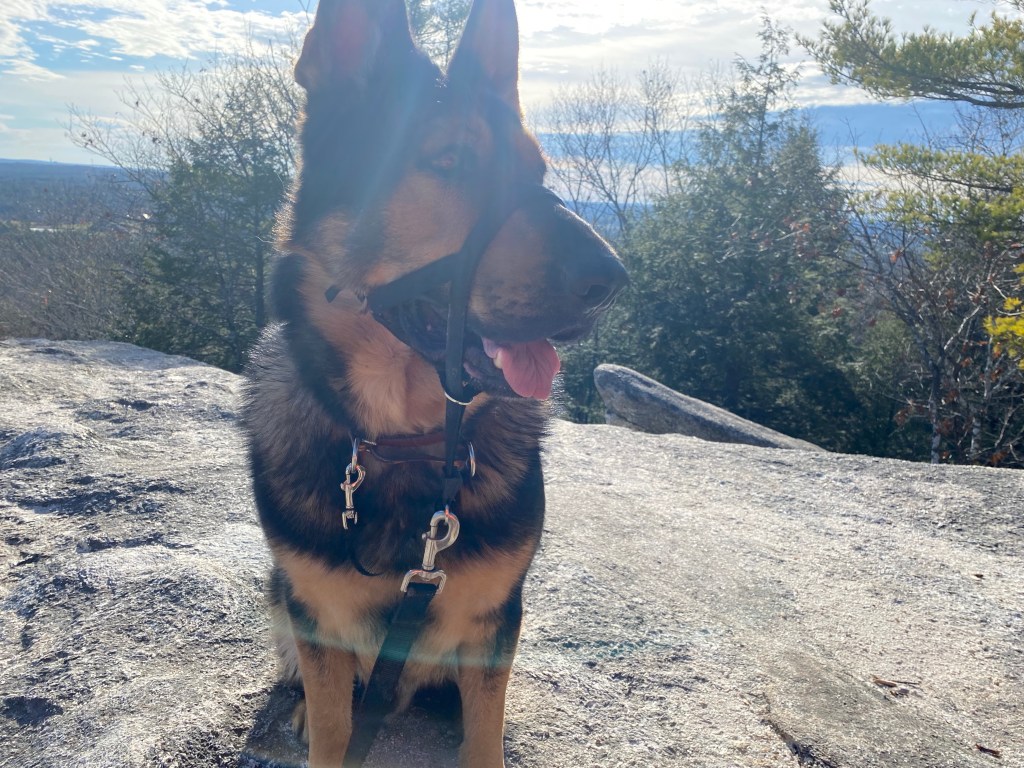
But with my hundred pound Czech bred German Shepherd, the cost of food reinforcements can be substantial, and there I was, discovering that all I had a literally limitless supply of completely free, non-fattening reinforcement!

Previously, I had been using “sniff” opportunities to teach loose leash walking. I used telephone poles and fire hydrants, along with a little food in between, which resulted in a somewhat variable delivery of reinforcement to nice leash walking behavior. It’s important to make a clear delineation between the end of cued performance and the beginning of the reinforcement opportunity, so I always ask for a stationary behavior, or at least some hand targets, before I deliver “sniff!” We w heel, walk trott, and come to a halt near a potentially smelly spot. Fire hydrant! Today, I might cue another few behaviors, maybe sit pretty, hand targets and then reward with “go sniff!”

Head halter training makes it much easier to put “go sniff” on cue, while on a harness, it might be difficult to encourage your dog with his head off the ground, he might be sniff grazing constantly, and when that is the case, sniffing opportunities are often reinforcing the dog for dragging people on the leash. Head halters allow me to deliver “sniff” opportunities to reinforce behaviors I love. See my head halter playlist for more information on that. (see https://youtube.com/playlist?list=PL1E6379E57F518AF0 ).

But even if you have a tiny dog who doesn’t need a head halter, you can teach your dog to respond to sniff reinforcement the same way they respond to hotdog reinforcement. Rather than ignoring or pestering your dog when he is sniffing around, you need to anticipate his interest and start controlling and delivering “sniff” opportunities the same way you control and deliver food: intentionally, not accidentally, and immediately after behaviors that you LIKE. Here’s a video of me doing that with Tigerlily quite a long time ago: https://youtu.be/fcgM4Bxb20k

As time has gone by, my dog has learned to glance towards things he would like to sniff, and then he look back at me, hoping I will give him an opportunity to earn the sniff. When I let him off-leash, I often say, “okay, go sniff!” and I think of those times as being his “sniff-meal” times, similar to the way he experiences food-meal times. He doesn’t ALWAYS have to work for sniffing reinforcement!

But when you use sniff as reinforcement, it means you really need to pay attention to your dog. You need your dog to trust that you understand what they want, and you will deliver. When your dog trusts you, they can ignore smelly sniffy stuff the same way they can ignore a bowl of meat on the floor, confident that you are going to deliver, and they don’t need to steal it.

Whole Dog Camp Lead Trainer Jenny Ruth Yasi, BFA, major in Behavior Science and Character Development, is a Certified Professional Dog Trainer (CPDT-KA) and Fear Free Certified Professional (FFCP Trainer),a Certified Control Unleashed Instructor (CCUI), and a Certified Trick Dog Instructor (CTDI). She sits on the Ethics and Legislative Committees of the Association of Professional Dog Trainers. 

My experiences with electric (underground or “invisible”) fences

I’ve never personally used an underground or “invisible fence.” I joke that I am the queen of gates, I love real fences, fences that don’t bite, fences that can support roses and clematis, pole beans and pumpkins.

But a lot of people sell them,  and plenty of students arrive, loath to tell me that they use these fences. But I’m shockingly good at being able to spot dogs who use these fences, even before the handlers tell me the stories.

One of my most important training Gurus, Susan Garrett, regularly repeats the phrase “sometimes could be any time” to warn us about the importance of consistency in training our dogs. Of course, when Susan says this, she’s not talking about aversives such as electric containment, she’s talking about the way we condition cues.  She’s saying, if sometimes your dog is rewarded for barging out the front door, or if sometimes you reinforce the dog who just broke his down stay with a run through the agility course, then that dog might expect that to happen other times. So we try to be as consistent as possible in training.  We want the dog to learn how we operate, sort of like the way you learn to operate the car. If you don’t have the key, it won’t go.  One pedal makes you go, the other makes you stop. If the rules of operation are unpredictably changing, that could make animals — including us — anxious, mentally ill, “neurotic.”

So I can see it when dogs have learned, “I could get zapped here, I could get zapped anywhere.” And this can change their whole relationship with the world.

For example, a pet owner wanted to introduce me to her yellow lab. I tried to start our visit as usual, with an off-leash romp, observing the dogs’ natural behavior in a hopefully relaxing, cheerful environment. But the handler released her leash, and her dog froze.

I asked, and they said yes, they’d installed an underground electric fence, not long ago, and walked around the property to show the dog where the “boundaries” were. Her dog seemed concerned we were about to show her some new boundaries.

Another person, with an adorable beagle, called seeking help because when the microwave “dinged,’ her dog was suddenly freaking out. It would run upstairs, frothing at the mouth, and cower under her bed.

“Did you recently install an electric fence?”  Yes. “Does it emit a warning tone?” Yes.

Another story — a Great Pyrenees had become terrified to get into the car. I asked if the family used electronic containment, and maybe drove their car through the fence-line with the dog in the car. Well yes, they had installed an underground “fence,” and left the collar on the dog when they took him for a ride, but “the fence company told us dogs don’t get the shock if they are inside the car.”

 Maybe you hear all this and think, these problems are not difficult to solve. Take the dog’s shock collar off before you go anywhere. Dogs can tell if they are wearing the collar or not.

Sure. But dogs know you apply the collar sometimes, and if you could do that sometimes, you could do anything anytime.

I don’t deny that some dogs seem to be old enough or infirm enough or scared enough to remain contained inside an underground fence, but it’s also true that many invisible things can go wrong.

With my visible fences, I can see when they need repair. And visible fences offer a bit of screening.  And they give dogs larger more sniff-able yards.

Perimeters are danger-zones for electronic-contained dogs. Invisible-fence installers might “train” with the dial on low, but a low-level shock would fail with high-level distractions, so they typically leave the collar set at a much higher level than the dog experiences in “training.” And if the dog trips -up strong shock while relaxing to sniff a dandelion, the dog may be truly frightened and find it difficult to relax in the yard after that.

 It’s scary to walk past dogs barking behind an invisible line.  It’s sad when dogs escape after wildlife and get hit by a car. Fortunately those things only happen “sometimes.”

What’s worse is the harm that happens every time. Dogs don’t know what your criteria is when you apply the collar. They weren’t doing anything wrong and they don’t know your good intentions. They just know, you did it.  You gave them a collar that bites.  You foolishly led them to get hurt. And if you might do that sometimes, you might not be entirely trustworthy any time.

Neutering my German Shepherd

I’m going to do it. Actually (remembering my childhood, where our family actually gelded our own pony, and it was common in those days to do that, maybe it still is, with elastic bands) I’m not going to do it, but my veterinarian is going to do it. She’s also going to do a gastropexy while she is at it, hopefully protecting him from torsion/bloat risk.

It’s hard to decide to neuter a dog. With Tigerlily, I waited til she was 3 years old. She was a rare breed (barbet) and in spite of how shy and prey driven she was, how she was really smaller than her siblings, I held onto that dumb desire to maybe breed her til she was three years old. She had a pretty miserable spaying procedure. Poor Tiger. I slept with her, holding a hot water bottle on her incision that night, and that helped. I wished I had spayed her earlier. Surgery doesn’t get easier as they get older.

M’Ocean is 3 years old too now. I am getting him neutered because I am realizing, I never want to breed him. I guess it takes me 3 years to realize that. Too many people use shock/prong/choke on these dogs and I don’t have a long list of people I would trust who want a GSD puppy. Also, a shock collar to teach him to avoid sexy coyotes seems like a worse training plan than neutering. As Denise Fenzi said, “If someone told me I could never eat another meal again, and there was a way to get rid of my craving for food, it seems like a no-brainer.”

M’Ocean is fully mature. 94 lbs. He’s basically a very confident assertive funny and friendly dog. I hate to do invasive things, but being a dog owner is invasive. Leash walking is invasive. The dog/human symbiotic relationship is as invasive as the hills. That dog has already left the doghouse. We’ve domesticated and changed dogs and we continue to do that.

It’s weird. Weird to have dogs who really feel like they are part of the family. My dogs feel like they are humans, kinda. They seem to believe I am their mom, or their Guru. They worship me, kinda. They aren’t looking to start another family. Well… my spayed older dog Bee is DEFINITELY not looking to start another family, but if I let M’Ocean spend a few days out in the woods this week, especially if I left bowls of food, probably he would go start another family, unless the male coyotes killed him first. But he’s living a good life amongst the humans, and in general he seems satisfied and well adapted to this domesticated dog arrangement.

I’ll let you know how it goes, and if neutering him changes anything in our lives, in good or bad ways. It’s going to cost me maybe $1000.00 which is just one more aspect of the ordeal. I really don’t like doing it, but after thinking it through, our risk versus benefit analysis, neutering him feels like the more responsible, safe, smart thing to do. And then next year, when we are hiking the Appalachian trail, I won’t have to worry quite so much about the dangerous ways sex hormones can influence coyote and dog behavior.

Resource Guarding, part one

IMG_9490
Picture the behavior you want to see.

“Resource guarding” is aggression that occurs around a dog’s possessions. The possession might be a food dish, dog bone, a soft space on the couch, or it could even be YOU. I once had a guest dog who would find a recently cleaned spot on the rug, and he would resource guard THAT!  It’s the opposite of what we want, which is  a relaxed attitude, a dog who isn’t worried about anything.

IMG_0124IMG_0192Resource guarding is the dog saying “Stay away!” It might mean stay away from my bone, my pups, my corner of the room, my human. It’s one of the most common behavioral problems I see, but fortunately one that is highly responsive to training.
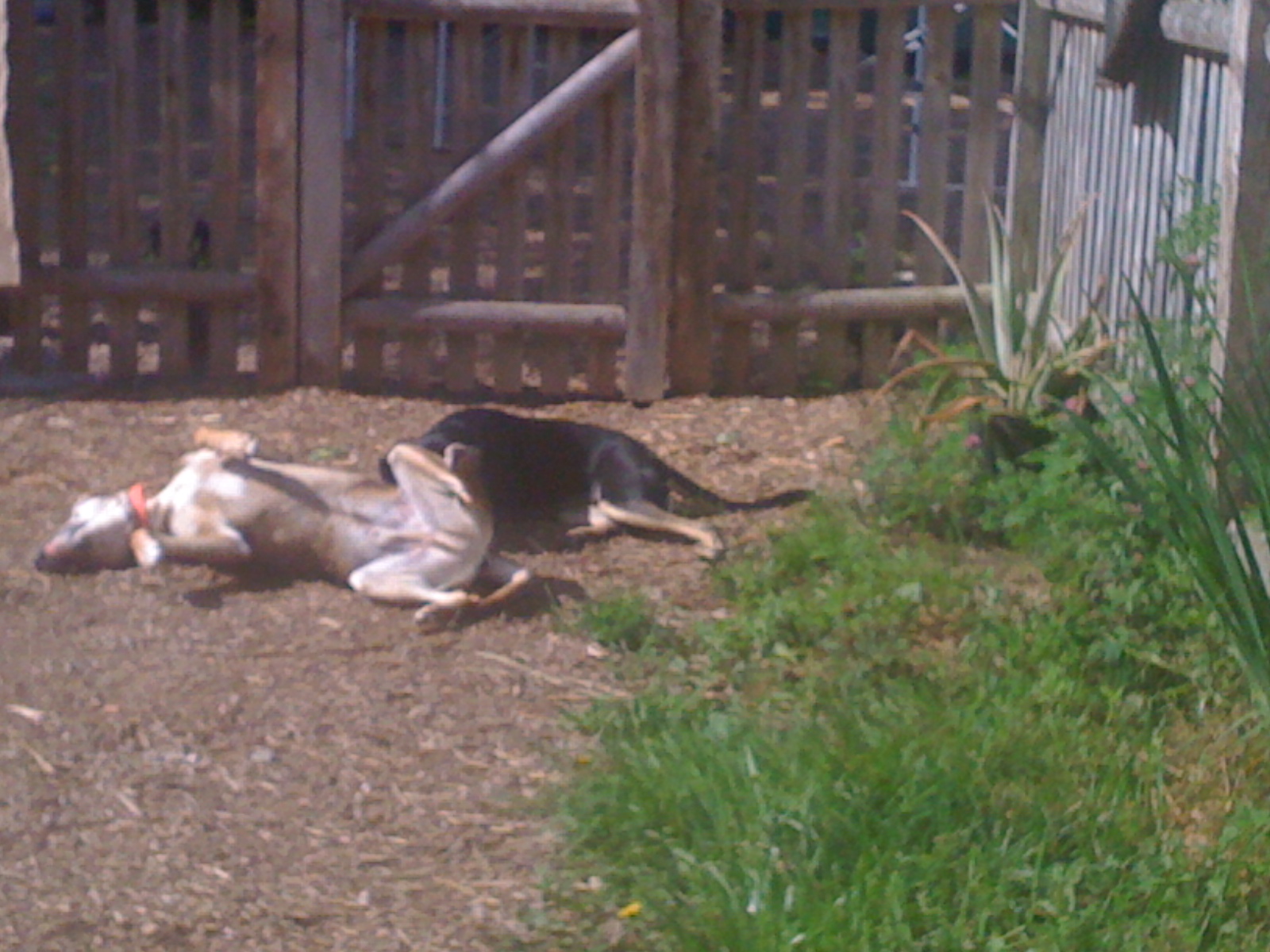
First off: Why do dogs do this? Like almost all aggression, resource guarding typically starts as insecurity, and a lack of confidence, a dog who can’t predict what’s going to happen with a resource. Over time the dog can come up with his own plan for controlling resources, and this can develop into increasing aggression. Some dogs might be genetically more prone to this. I saw a puppy once that was scary aggressive, resource guarding at 16 weeks, and I was told euthanized by 6 months. Something was wrong with that pup.  But that is very rare. Far more typically, resource guarding is triggered by the environment, regardless of genetics.  Resource guarding is almost always a learned behavior. The dog has learned to act aggressively, because it allows them to control access to limited valuable resources.

IMG_0251This is why trying to pick up and control all potential triggers often fails.  You can’t eliminate every possible resource in the environment. When you limit some resources, you’re making every other resource in the environment seem more important,   MORE valuable, and this has potential to escalate things a  dog may choose to guard. We will never be “done” with our mission to  prevent development of resource guarding in all of our dogs. Behavioral health requires a  sense of  resource security throughout the lifespan.
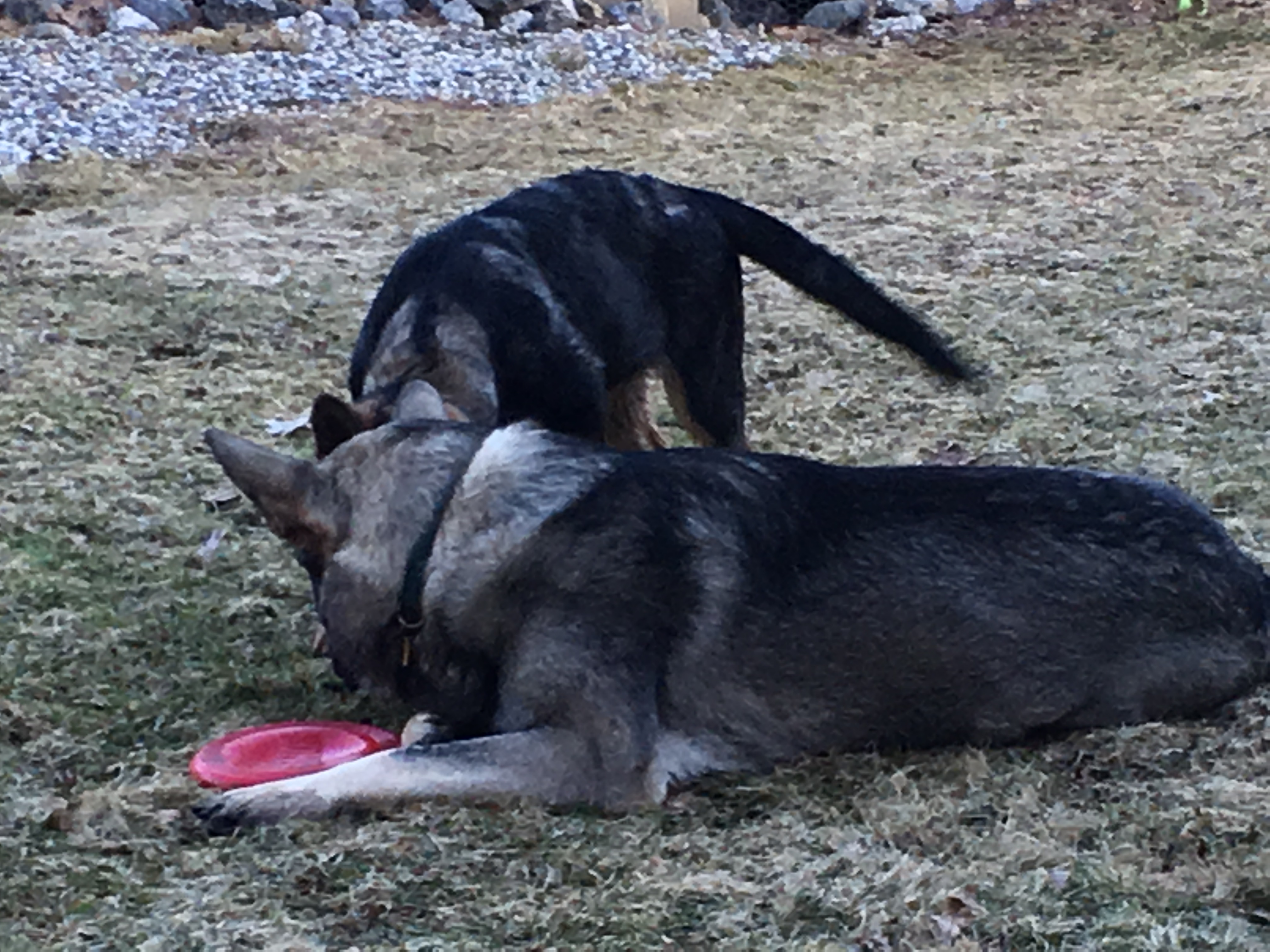
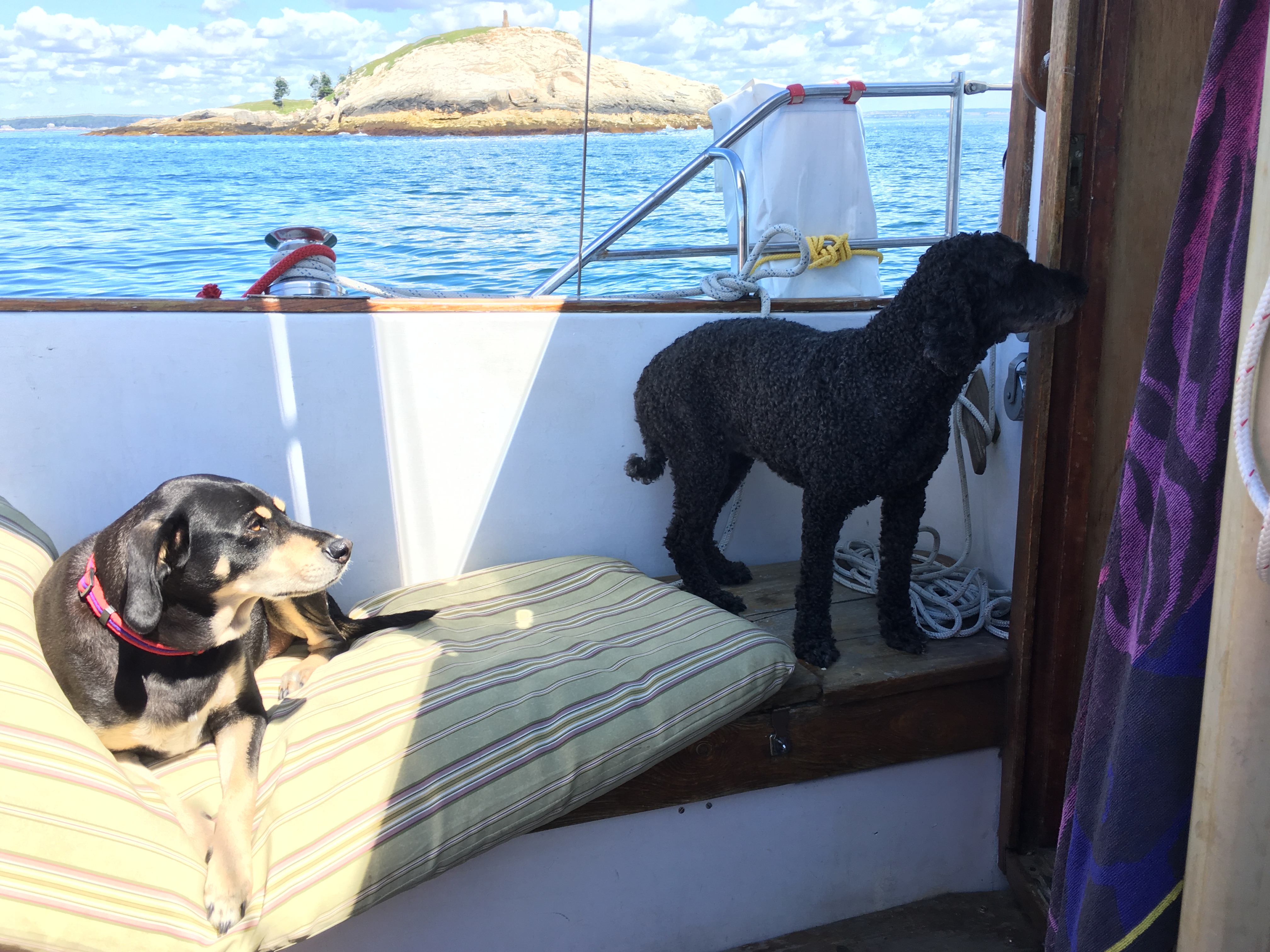
When you’ve  flooded your environment with other resources,  the stinky spot on the rug doesn’t stand out so much. So that’s one way of approaching the problem. Rather than handing out one ball in a group of 6 dogs, dump out 24 balls. Begin with balls just laying there, don’t throw them right off the bat! If it looks like one dog is experiencing a ball shortage, dump out MORE balls. The idea is to have so many balls, no dog needs to worry about balls.  Ignore the balls, don’t touch the balls,  let the dogs do what they want. Add more balls as necessary.  Do the same if you pass out dog bones or treats. I remember spending $30 on 12 dog bones once, but it was super worthwhile!

I’ve seen dogs learn how to relax, again and again, in resource flooded environments. The resource guarder will likely collect  items: maybe six tennis balls, plus two bones and a rag, but then they start to  settle down and feel foolish because none of the other dogs cares a bit about what they’ve got. All the other dogs have what they need and they aren’t bothering the resource guarder. What does this tell you about the world?! I don’t know, but maybe something!

These ideas are not necessarily a prescription, but  reflective of experiences I’ve had with dogs who stay with me. As an old friend used to say to me when talking about beekeeping, “you need to think like a bee!” The same thing is true regarding resource guarding in dogs. We have to think of how we would feel if someone came and took our iphone out of our hands! Fortunately, dogs don’t care about iphones! IMG_9288


Boat Dog Doo-doo

IMG_0272We travel with our dogs, to competitions, festivals and educational events, via boat and plane and car. Of the many tricks they do, one that I am often asked about is , “You get them to “go” on the boat? How did you do that?!”
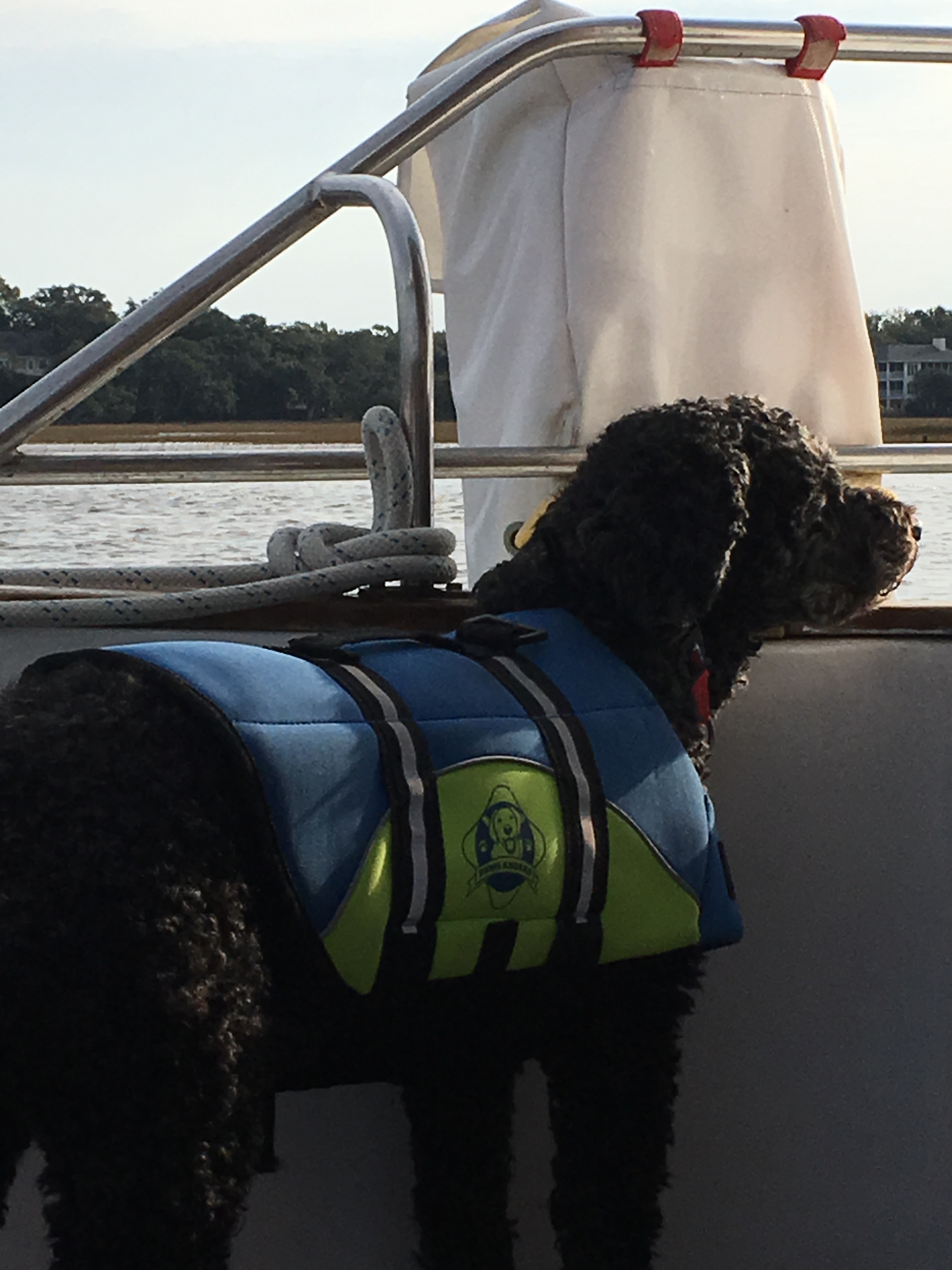
In a nutshell, the answer is, we taught them to go “pee or poop!” (help me come up with funnier cues! see comments!) “outside” first. And then, we taught them that the top deck of the boat is “outside” and we cued them to go “pee or poop” there.

Assuming you need more detail than that, I have to go all the way back to when my dogs were babies and newly rescued, and of course I crate trained them. Crate training does not mean puppy torture, it means I used a physical cue to help condition them to feel safe and relaxed on cue. Relaxing (and loving it!) on cue in the crate then helped me condition many other behaviors.

So first you need to teach your dog/pup to LOVE the crate. I’ll go into that in more detail elsewhere, but basically this is done by “leaving ‘em wanting more,” keeping crated sessions very short and highly reinforced. For example, try starting by locking a piece of stinky cheese, or supper, or a dog bone into the crate. Dog wants in! Let the dog into the crate only when the dog is really demanding it, and then when the dog leaves, lock the dog out! Dog wants to get into the crate! Yay! Trade (always trade, don’t just take stuff from the dog) beef bone for a piece of chicken if the dog tries to leave crate with dog bone. Leave dog bone in the closed crate. In our house, the crate is the only place we allow dogs to chew raw beef bone. That makes going into the crate a special opportunity to chew! Never take a pup out of a crate when he is fussing, always wait for that one quiet second (and then run!) to let him out of the crate when he is quiet and calm. See Susan Garrett’s wonderful CD and book “Crate Games” for more details on how and why you should crate train every dog. Her book “Ruff Love” is also helpful if you are starting with an adult dog.

IMG_2720
The lifejackets are most important when loading and unloading the dogs off and on the boat. They give you a handle to maneuver your dog as well as flotation.

Once your dog likes the crate, and you’ve got him sleeping in the crate through the night (my puppy crate would actually be either right beside my bed or actually ON my bed at this point!), leash in the morning before he fusses,  walk him to the door, and say, “outside!” as you go outside. Say “outside” every time you go outside to your designated convenient potty place.  Wait a minute, up to three minutes, for him to go pee or poop. If he “goes,” say your cue words as he is going, and deliver a wonderful treat right after he goes. If your yard is fenced in, the “treat”  could be letting him off leash. You could also just praise and pet, or praise and deliver a food treat. If he doesn’t “go,” don’t reward it. Bring him back inside, lovingly put him back in the crate, and try again in ten or fifteen minutes (or half an hour). Eventually he will “go”, you will deliver your cue as he goes, and now you can go for a walk or play off-leash.

In this way, my dogs learn to go to the bathroom on cue right at the beginning of our adventures. Some people make the mistake of walking until the doggie goes potty, and then that’s the end! Dogs learn to hold it FOREVER in order to get a longer (and longer!) adventure. If my dogs don’t go to the bathroom pretty darn quickly, I end the walk, crate to prevent accidents, and try again just a little bit later. In this way, my dogs learned that when I pull over to the side of the highway and say “pee or poop,” their best bet is to go to the bathroom immediately, and then I might let them sniff around for a few minutes afterwards. At dog events, I take them out and if they don’t go immediately, they go back in the shady car, or back into their crate in the show’s crate room. I associate the phrase “pee or poop!” with the activity so often (regularly!) that they hear the phrase and know they know that this signals a limited opportunity. If they need to go, they go, and if they don’t go, the opportunity goes away for now.

And so on the boat. I brought them up on deck, said “lets go outside” as we went from the cabin up the companionway onto the deck, then I said “pee or poop!” Both my dogs were worried about this at first. They held it and wished we were going ashore. But we weren’t going ashore. Tiger lily “held it” for a record of 36 hours. But then she peed. Bee (as I knew she would) got this right away. Once the two of them both “pee or poop”’d once or twice on deck, and were rewarded for it, it just was easier and easier. They just go right on the deck and I put poops in a composter can, and wash off the urine (see a previous blog post for this detail). So I don’t want them to hold it till we go ashore, so they’ve learned that after they go to the bathroom, I take them to shore.

Nowadays, they are mature and I only crate them at dog events.  We can stop on a dock for a few days and then go to sea, and they are flexible. They let me know that they want to go “outside,” and they are adapted to going wherever and whenever I tell them to go. Sometimes, Tigerlily (who is 12 years old) has a hard time waking up, so recently I’ve found that starting up the boat engine is a cue to her that she better wake up and go while the going is good. I start the engine, she wakes herself up enough to get up on deck. We clean up, weigh anchor and off we go.

Questions? Alternative cue ideas? Put them in the comments section below.

Teaching dogs to predict the future

IMG_7205

My dog can’t tell me the winning lottery number. But teaching a language your dog can understand allow your dog will be able to know a lot about whatever is coming up next. This ability to get clear information from words builds dogs’ interest in whatever I have to say.

Many people chat, but idle chatter is confusing to dogs. For example, people say “down” when a dog is jumping up on them, yet they don’t expect the dog to lay down. Dogs don’t “naturally” understand words, especially similar sounding but differently used words such as “no” and “go” and “okay.” It requires regular practice.

Guests are often surprised by the lack of dog mayhem at our and doors gates. My dogs are relaxed not because I’ve had to “show them who’s boss”, but  because I can usually tell them who is at the door, and if they are coming outside or not. I can tell them to relax. When I say, “this is for Tigerlily,” only Tigerlily gets up and walks to the door. If a door event does not include dog participation, I say,  “sorry! Dogs stay!”and  they barely lift their heads, thump a tail, and go back to sleep. With experience  their ability to understand grows stronger year by year.

Of course I must use the full palette of dog training tricks (food, toys, praise,privileges) to teach my dogs, but because I formally teach and use words, I can use words to reinforce desirable behaviors. Information is very reinforcing, so I let my dogs know when I see a “stranger” dog approaching.  “Do you see the dog?” It  helps my formerly “nervous Nellie” dog to avoid getting suddenly startled by a hairy beast. “Oh that’s Rover. He’s a nice dog!”

My dogs have lots of  intentionally trained experiences with all these words. Their understanding puts me in a leadership position. They don’t need to warn me about the dog, because they can hear that I already know.  They see I am not  hysterical. My words help them predict that we will safely navigate any situation.

Sometimes people ask me how many words my dogs understand.  The last time I counted, many years ago, it was about 100 different words. That’s not many, my dogs are mutts not border collies, but just  few trained words can  go together to make almost an infinite number of  different sentences. They are constantly learning new words.

When I  first taught Tigerlily the difference between ball, rope, and pencil, I saw her struggle to recognize subtle differences between English language sounds.  So now I never (ever!) use the word “no” because it sounds perilously close to “go”. When I was teaching “down” and “bow” and I saw that “bow” sounded  like “down,” so I changed the verbal cue to “ta da!” Much easier!

IMG_0044

Some words (cues) are quite challenging to train, but many are easy! When I bring the puppy outside, I say “outside!” Serving water, I say “water!” Raining hard outside? For fun  I try explaining, “water outside! Water, water, water!” It’s fun to see the light bulbs go on in their brains.

Choosing words carefully is a huge part of this training game. For example,  the word “down” only means “lay down.” When I go downstairs I simply say “stairs!” or (on the boat) “go below!”If I want the dog to put all her paws on the floor I say “off” (not “down”).

Teaching clear precise words also helps us better observe how dogs think. It was very interesting to me to see that my dog Tigerlily identified her realistic looking toy squirrel as a “squirrel.” When I tell her to “get the squirrel and put it in the basket!” to my dogs, we were sharing a good joke!

IMG_0224