


We’re going to define “punishment” and “reinforcement” here because it’s most likely not what your grand-dad told you. It also might not be what your balanced trainer thinks it is. And if you really understand the four quadrants, you’ll be able to use them all four without intentionally adding fear, pain, stress or forced suppression of problem behaviors any part of your strategy to teach and handle dogs.
I am a certified Fear Free Professional Trainer, Certified Control Unleashed Instructor, and originator of the Signal training program, and I don’t use ecollars, prong collars or slip leads, I don’t use “pressure” to train dogs, but I do understand and consider the functions of all four quadrants (Negative and Positive Reinforcement, Negative and Positive Punishment) in training dogs.
| Positive Reinforcement – something added right after a behavior (like a cookie after a sit) that causes that behavior of sitting to get a cookie to strengthen | Negative Reinforcement – something removed right after a behavior (like taking off the leash right after a sit) that causes the dog’s behavior of sitting to get the leash removed to strengthen |
| Positive Punishment — Something added right after a behavior (a leash is put on a dog who is pestering another dog) that causes the pestering behavior to stop or weaken | Negative Punishment— something removed right after a behavior (a toy is put away right after the dog bites or barks at the handler) that causes the biting and barking behaviors to stop or weaken |
I love the term “fear free,” (rather than “all positive,” or “force free”) because that’s the more accurate description of how I approach training. I don’t view the quadrants judgmentally, as though “Positive Reinforcement” is better than “Negative Reinforcement.” These are behavior science terms and we can’t entirely avoid any of the four quadrants (R+, R-, P+, P-), nor extinction. Saying you are “all positive” would be like saying you are a mathematician who only adds. We need to apply our understanding of all four quadrants in order to create the effective and efficient behavior equations we desire. But we don’t need to add pain, fear, or stress. And reinforcement and punishment are not the only things that strengthen or weaken behaviors. The environment (including us), the “antecedent arrangements” help to set up the behavioral options that animals choose from.
I let AI write the definition: Antecedent arrangement is a behavior modification strategy, especially in animal training, that involves designing the environment (antecedents) before a behavior occurs to make desired actions easier and unwanted actions less likely, essentially setting the animal up for success by controlling cues and context, rather than reacting after the behavior happens. It’s a proactive approach, manipulating distant (environment) or immediate (cues, objects) factors to influence choices, making the ‘right’ behavior the easiest option.
But here, lets focus on the quadrants and my point that you might need to add or subtract something in a way that punishes (weakens) undesirable responses, but it doesn’t need to (and should not, for reasons I explain below) hurt, scare, or stress your dog.
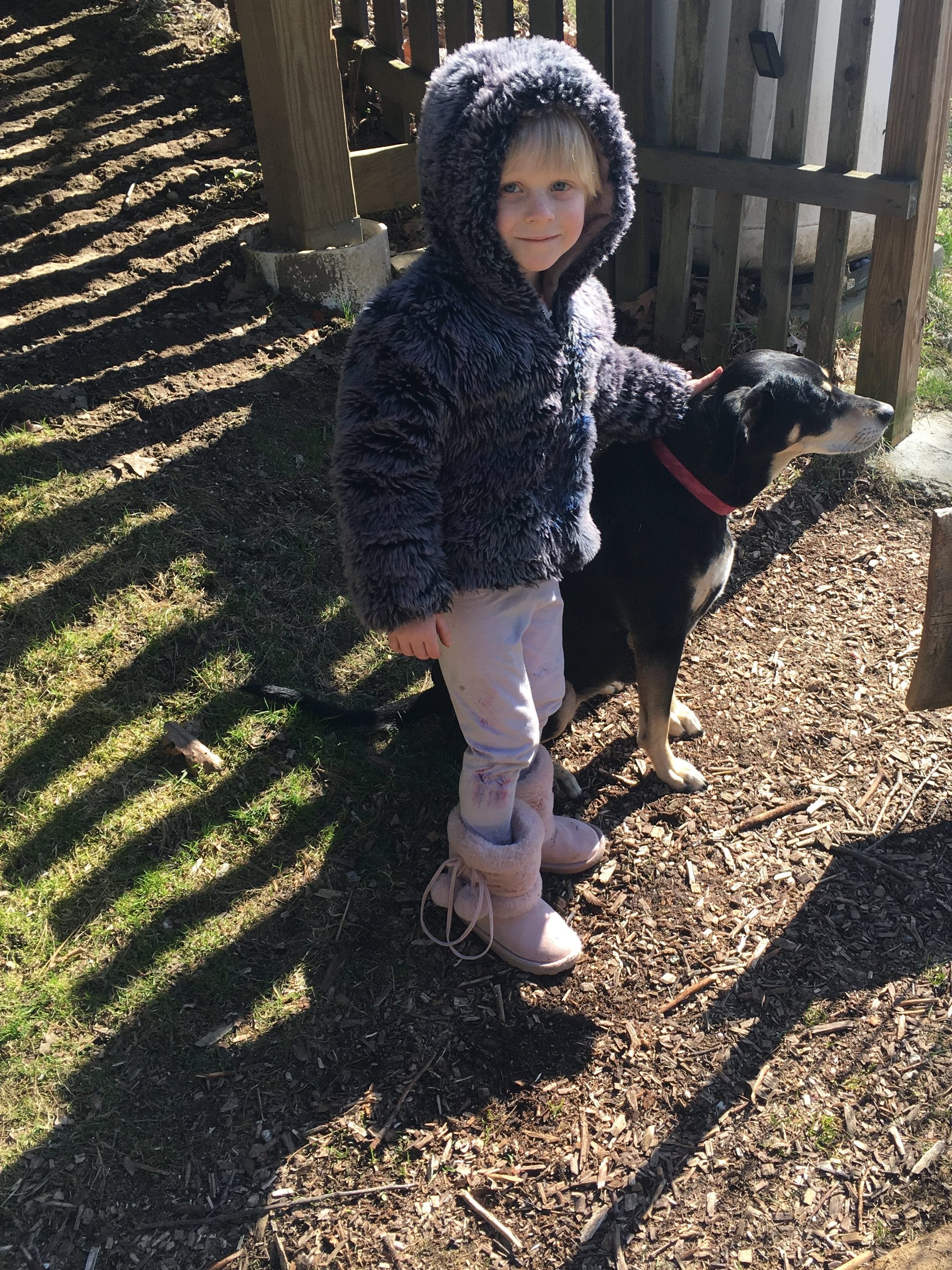
Recently I punished Maggie’s refusal to come when called by going inside and leaving her outside alone (that’s Negative Punishment. She wanted me to stay outside and play with her). Two minutes later, I restored her option to come in. She RAN to rejoin me, and I reinforced that.
Quickie background for those new to behavior science: “Positive” and “negative” doesn’t mean good and bad. Positive literally refers to something added such as a physical sensation, environmental or social opportunity, warning or threat, or a physical thing. Punishment or reinforcement weakening or strengthening functions) manifest from our choices of these things added or subtracted, and they must take place immediately after or in direct association with the target behavior. We might add food or heat or a ball or another dog (or me) or we might take any one of those things away.
If your dog wants the thing to be added or taken away, this functions as reinforcement, strengthening the behavior it follows. The dog learns “doing this got (or got rid of) that. I can do this, when I want/or want to get rid of, that.” Reinforcement strengthens behavior very predictably, because your dog is working to get the reinforcement as though it’s the pot of gold at the end of the rainbow: you know where the dog is going. When you see a strong behavior in a dog, ask yourself, “what is the dog working to achieve?” If you don’t like the behavior, can you lay out a better route for the dog to achieve the same thing? Can you put the pot of gold at the end of a different rainbow?
Punishment weakens behaviors. Animals seek to escape or avoid punishment, and they might escape by a zillion different ways. They might cooperate to make punishment stop, or they might get depressed and shut down, they might react aggressively, they might run away, they might stop trying, they might try many different strategies to escape or avoid punishment. They might react to punishment differently each time it occurs. This is why the results of punishment are far less predictable than the results of reinforcement. It’s difficult to see behaviors or potential behaviors weakening or disappearing, and we might not recognize that something is punishing a behavior that is barely happening, but it’s easier to notice escape, avoidance (or refusal) behaviors. Escape and avoidance often reveal unintentionally punishing experiences that dogs connect to the behaviors they are avoiding.
For new pet families especially, both punishment and reinforcement frequently happens by accident, unconsciously. People deliver both almost like they are nervous ticks. Here’s a cookie for no reason, and here’s a reprimand because the handler is embarrassed. Or people follow a behavior with something they think the animal should like, but doesn’t. Of they follow a problem behavior with something the animal shouldn’t like, but does!
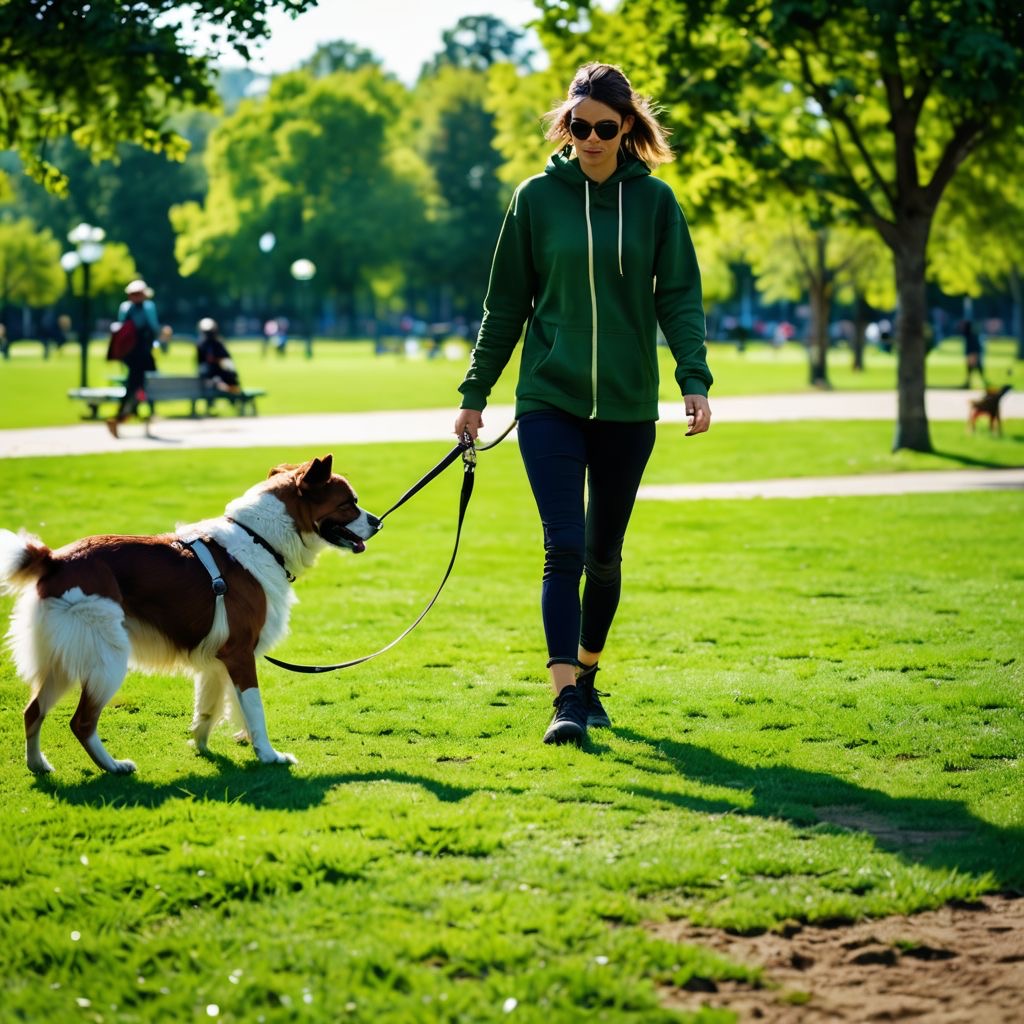

Consider a behavior I sometimes dislike: barking. I do require alert barks and so I put both “speak” and “ssh” on cue, using positive reinforcement (added food and attention). We practice and grow the response around distractions.
But when problem barking doesn’t stop, I can punish it by taking away a privilege. Overly excited barking dog goes behind a gate, into a crate or car, or we can move further away from whatever is stimulating the behavior. Losing a desired privilege weakens the behavior it follows. When the dog stops barking, I can give back the privilege. It’s not all or nothing, I can add and subtract incrementally, according to what the dog and I both need.
One year ago I was gifted a 2.5 year old border collie, Maggie. She came with some scary behaviors, and she went absolutely bonkers at people who came in the house. I popped her into her normally beloved crate with a bone. At first she screamed and smashed around inside the crate, even when I was shoving cheese in there. So that was, sadly, positive punishment (adding confinement), and also negative punishment ( freedom taken away ).
But I wasn’t angry. I wasn’t hurting or scaring her. I was apparently pissing her off, and she was not accustomed to being told what to do but this (and medication for two months) reduced the stimuli that was reinforcing barking. Maggie learned aggressive behaviors resulted in lost privileges. At first, when she kept barking in the crate, I covered her crate with a blanket (further reducing visual stimuli, depriving her of her view of our house guests). It’s often true that aggressive dogs want that opportunity to aggress. It can be fun, satisfying (reinforcing) to scream and scare scary things away. Animals might also enjoy looking things that frighten them. They don’t always run away from them, sometimes they focus on them, curious, eager to intimidate and scare those scary things aways.
When I took those desired options away in response to barking (that’s punishment) Maggie’s mad-dog barking behavior rapidly weakened and stopped. I reinforced each increment of her “calming down” behaviors by incrementally giving those options back: removing the crate cover (positive reinforcement! you can quietly look at the scary people from a safe place) the instant she stopped barking. I taught Maggie that a muzzle comes with added privileges (reinforcement) and so she didn’t try to escape or avoid the muzzle. Now quiet, much calmer, I muzzled her and Maggie came out and socialized, collecting reinforcement she was hoping for (satisfying curiosity and reassuring herself) without intimidating guests. Quickly she was showing off lovey-dovey behaviors, so I negatively reinforced that by removing the muzzle. The positively reinforced her with treats and love.
It took Maggie almost one year to grow her belief that being calm and lovey-dovey is the most reliable way to get what she wants. She has turned into such a sweet dependable, trustworthy dog. I honestly can’t believe how much she has changed in just one year! I guess I WILL be getting back into agility! She loves it!
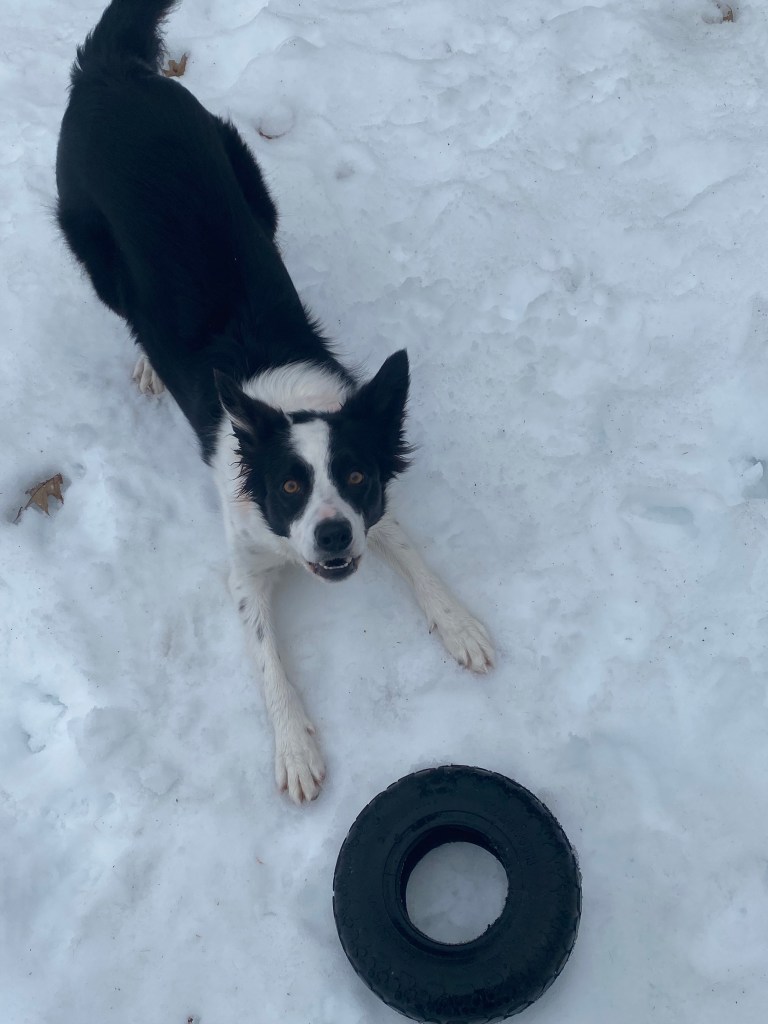
So of course Fear Free trainers can use all the quadrants, and we do so without hurting, frightening or intentionally stressing dogs.
But punishment is not something a dog chooses. Maggie loves her crate but she doesn’t love it when we have company and she needs my permission to get out of it. Animals don’t work to get paid with punishment. Punishment is a disappointment. It can be frustrating, irritating, like going down a dead end road, or hitting a traffic jam or seeing someone else take your job. Animals don’t like punishment and they will find or create work-arounds to avoid punishment. It’s up to us to teach them the road to reinforcement, or else their work arounds might be more of a problem than whatever behavior you thought you were punishing.
Yelling, spanking, hurting, or scaring animals (or humans) might not, from a behavior science perspective, even qualify as punishment! Hurting, intimidating or frightening a dog might not only fail to weaken a behavior, just like traffic on the highway doesn’t stop people from driving to work. Pain, fear or frustration can unintentionally build problem behaviors as animals become motivated and reinforced by their success in defending themselves from punishment.
The way the reinforcement and punishment functions is not intuitively obvious for everyone. Think of bite sports, where handler assistants wack and yell at the dog, delivering what dogs perceive as “fun” to positively reinforce dogs for jumping up and biting. That’s right. Getting yelled at, wacked and shoved around can reinforce behaviors. Many dogs will jump all over you to get it. Dogs might even love your adorably inflamed tone of voice. Or think of dogs whose “escape artist” behaviors grow stronger as they discover the joy of playing keep away from screaming humans, having a great time and especially enjoying the bit when the human is losing their game.
In my experience, use of ecollars, prong, slip lead or any sort of choking makes for less happy, more frustrated, sharper and less predictable behaviors in dogs. Dogs often don’t learn what people hope they will learn from aversives.
If an adult dog bites my hand when we are playing a toy game, I immediately end the game, put away the toy, and walk away while making a new training plan. I’m not mad, I’m not hurting, scaring or yelling at the dog, but I am punishing the dog’s behavior of biting my hand. The dog doesn’t want me to end the game. He doesn’t want me to walk away. So he is careful to avoid biting me again.
Some people get mad or frustrated with their dogs, but they don’t change the consequences for the dog. The game continues. It’s very common for pet caregivers to unconsciously punish and reinforce the very same behaviors. They reprimand the dog, yet they keep on playing! This can make dogs neurotic, anxious, and more likely to fail.
Punishment isn’t bad and reinforcement isn’t good. But doing both unconsciously is bad. Clarity is good. Feeling safe is good.
Reinforcement and punishment are constantly influencing behaviors in often unrecognized ways. Watch behaviors that are growing: whatever happens immediately after (or sometimes during) the behavior is reinforcing it. Watch what happens immediately before escape or avoidant behaviors: that behavior is being punished somehow
Just because you didn’t want to punish your dog’s behaviors doesn’t mean it doesn’t happen. We need to notice and manage all of it to protect and grow our dogs’ most desirable behaviors.

Jenny Ruth Yasi is author of “Signal Training: Leading to Freedom: Head halters, Muzzles, Calming Caps and Tricks for Safer Loose Leash Walking,” available on Amazon, and Barnes and Noble.
https://a.co/d/8mVAE6w: Punishment happens (and why Punishment isn’t “bad” and Reinforcement isn’t “good” )
 In behavior science terminology, Reinforcement (R) and Punishment(P) are functions or “consequences” that either strengthen(R) or weaken(P) behavior.
 When my dog breaks a sit or a down, I avoid a re-cue. Instead I can deliver a “release signal” (“okay! all done!”) which leaves her wanting more. WHAT?! The game is over? Let me try again!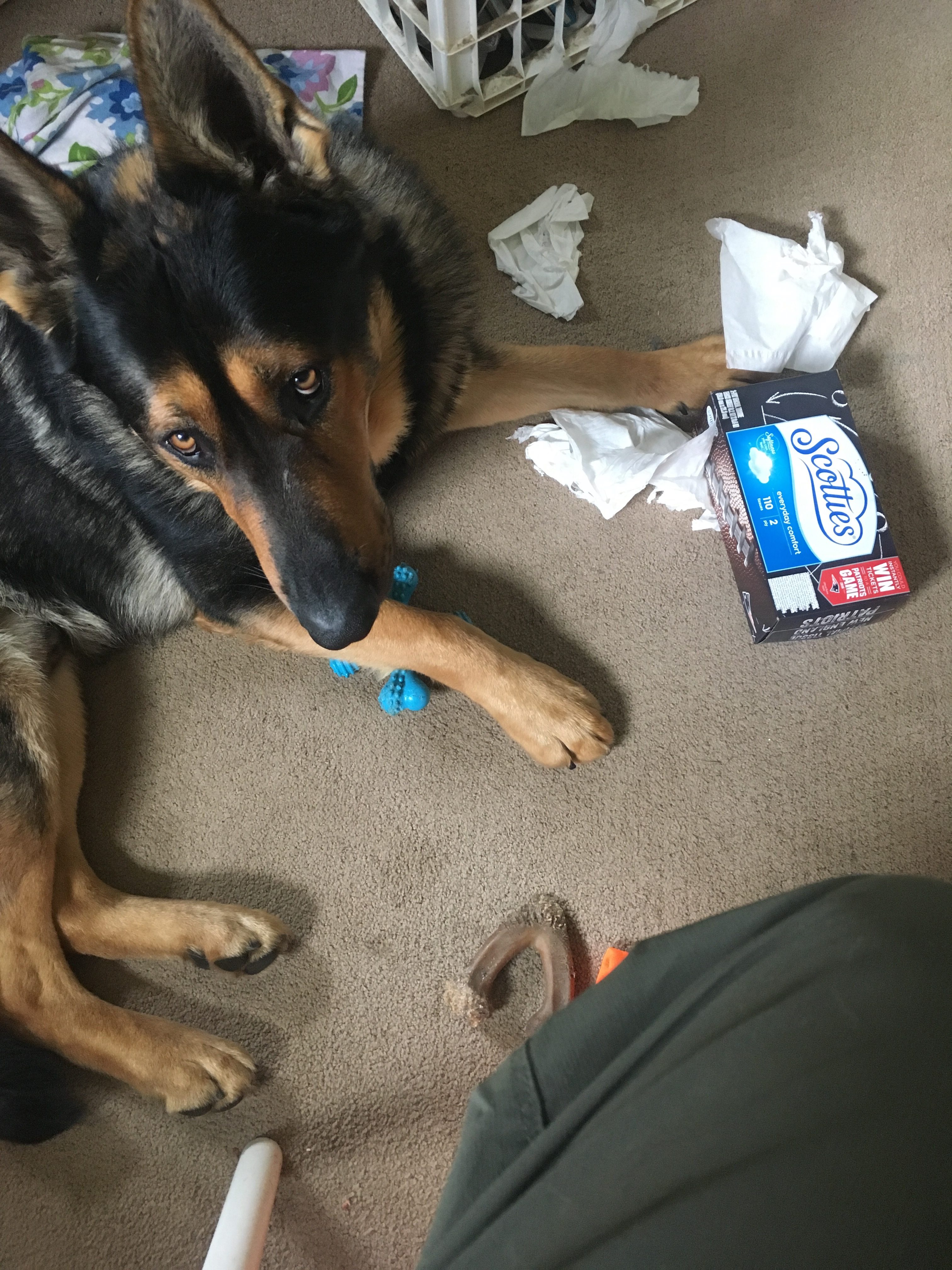
































 I had a student once who exclaimed, “I don’t care why the dog does this, I just want him to stop!”
 So here’s your warning: your teacher will grow to tell you what you want to hear, because if she is telling you stuff you don’t want to hear, you will find another trainer.


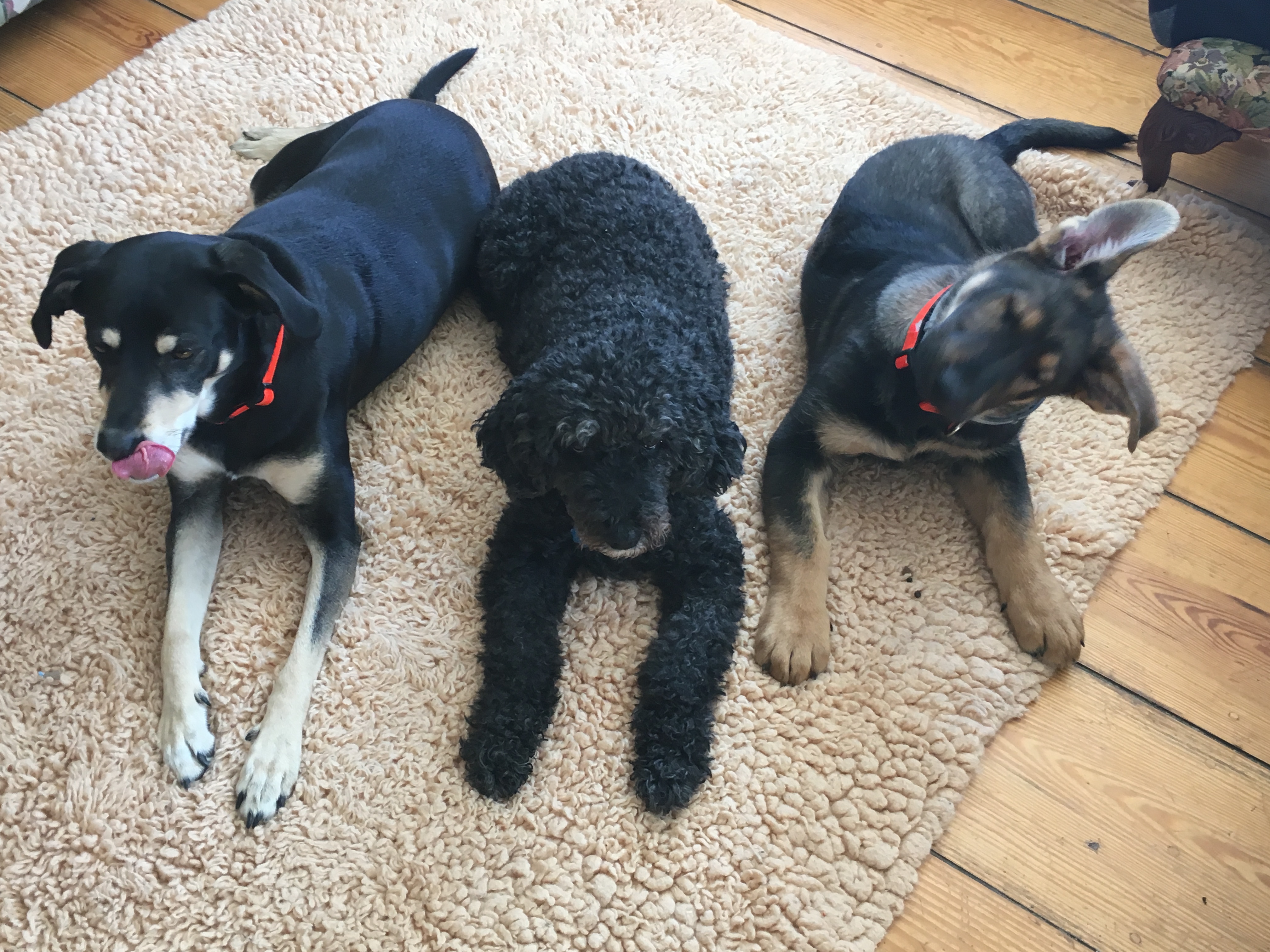 You don’t have to be sniffing butts to be socializing. Socialization, for us as well as for our puppies, involves success in a wide range of environmental challenges. Socialization is about building confidence, a history of good experiences,that helps your dog set his/her expectations in a positive way.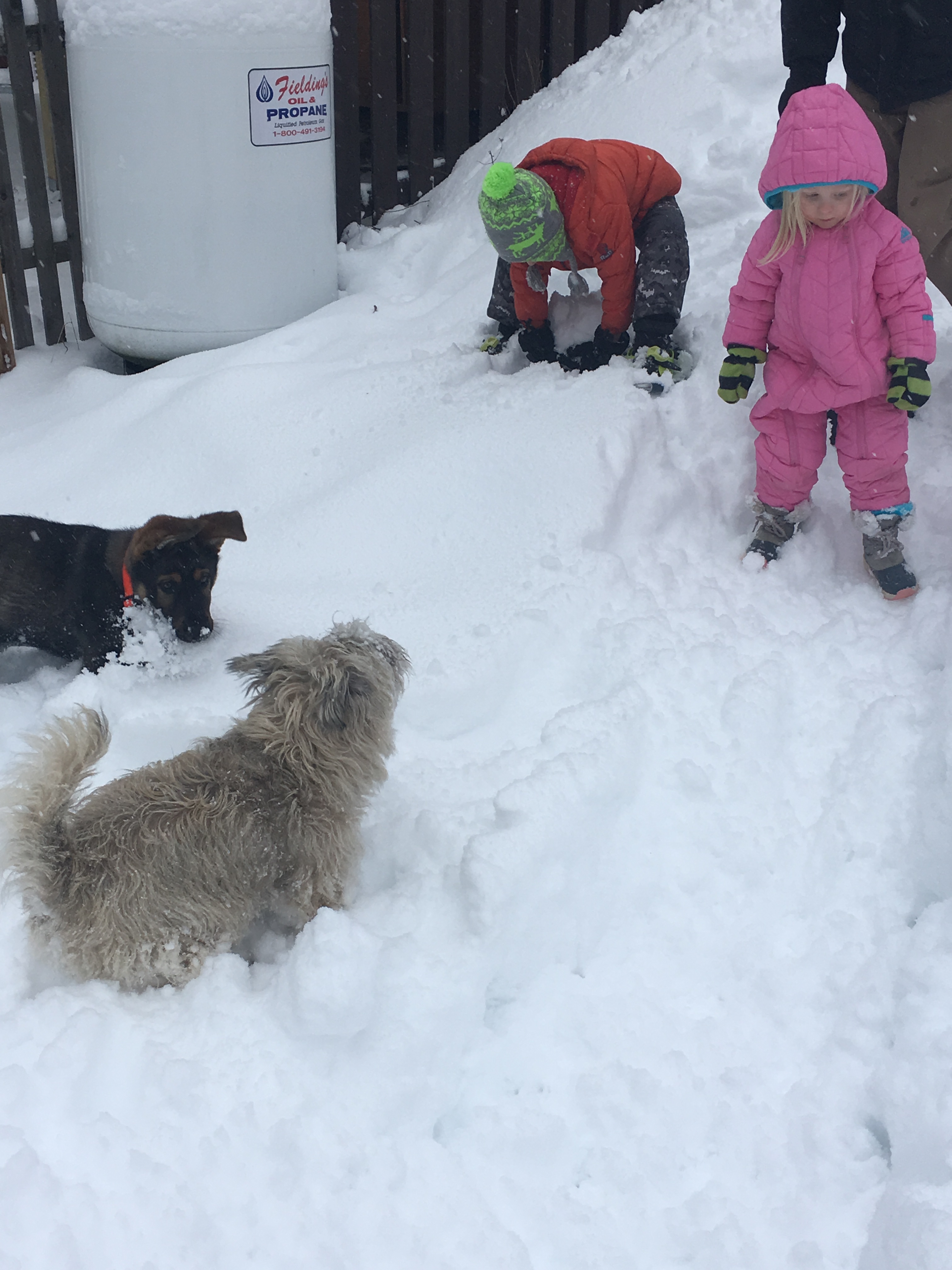
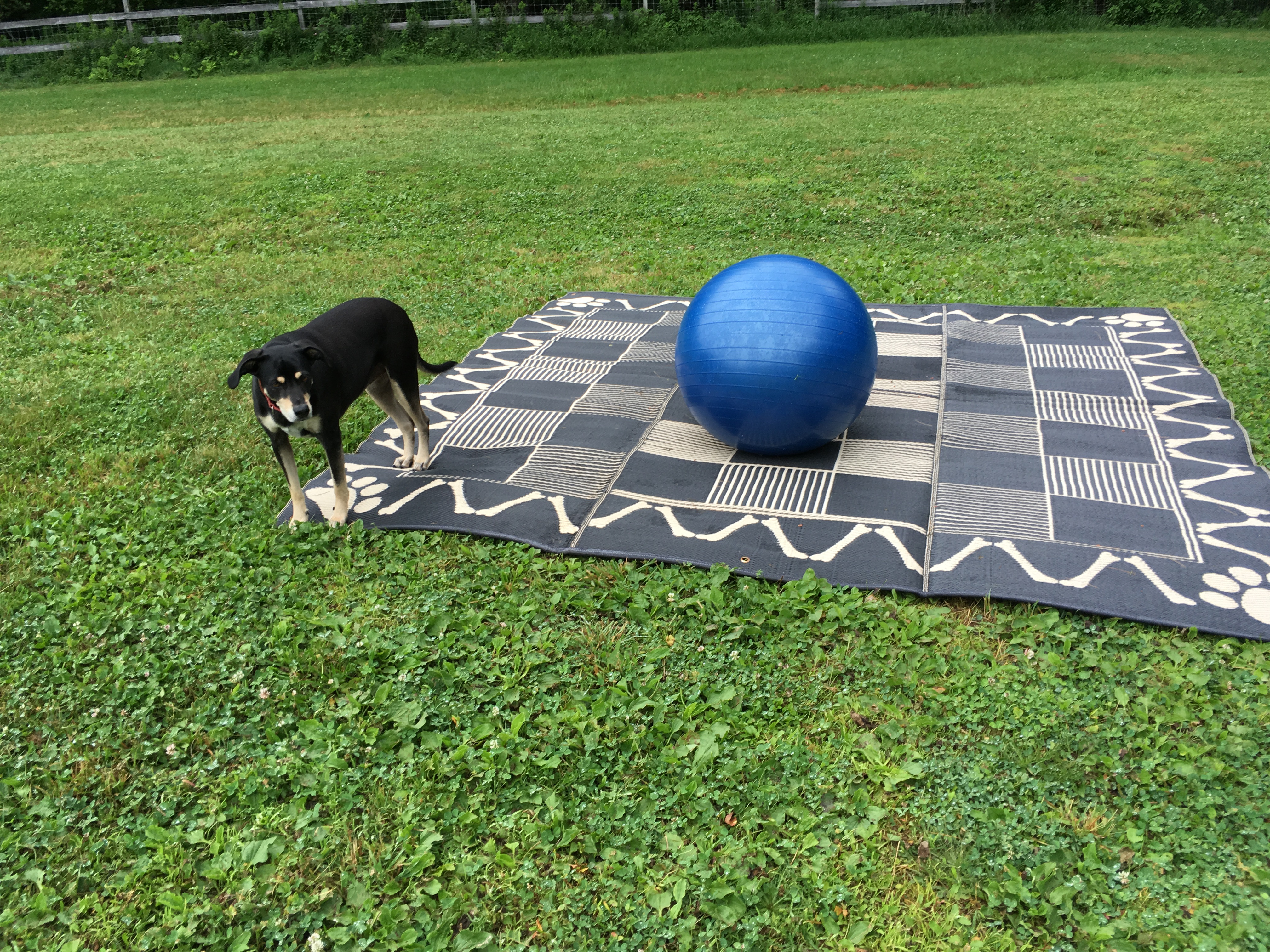 Example: Recently I was at the ferry terminal, and a young woman had a large young dog who was staring and pulling towards my puppy. My pup started to bark. The woman said, “Is it okay if I let them meet?” I said, “not while my puppy is acting like this!” My puppy settled down and then he visibly sighed with relief as they headed off in another direction. When your dog knows that you are not going to force him to put up with unwanted advances of pushy strangers, your dog is going to relax a lot more. He’ll learn to trust your judgement.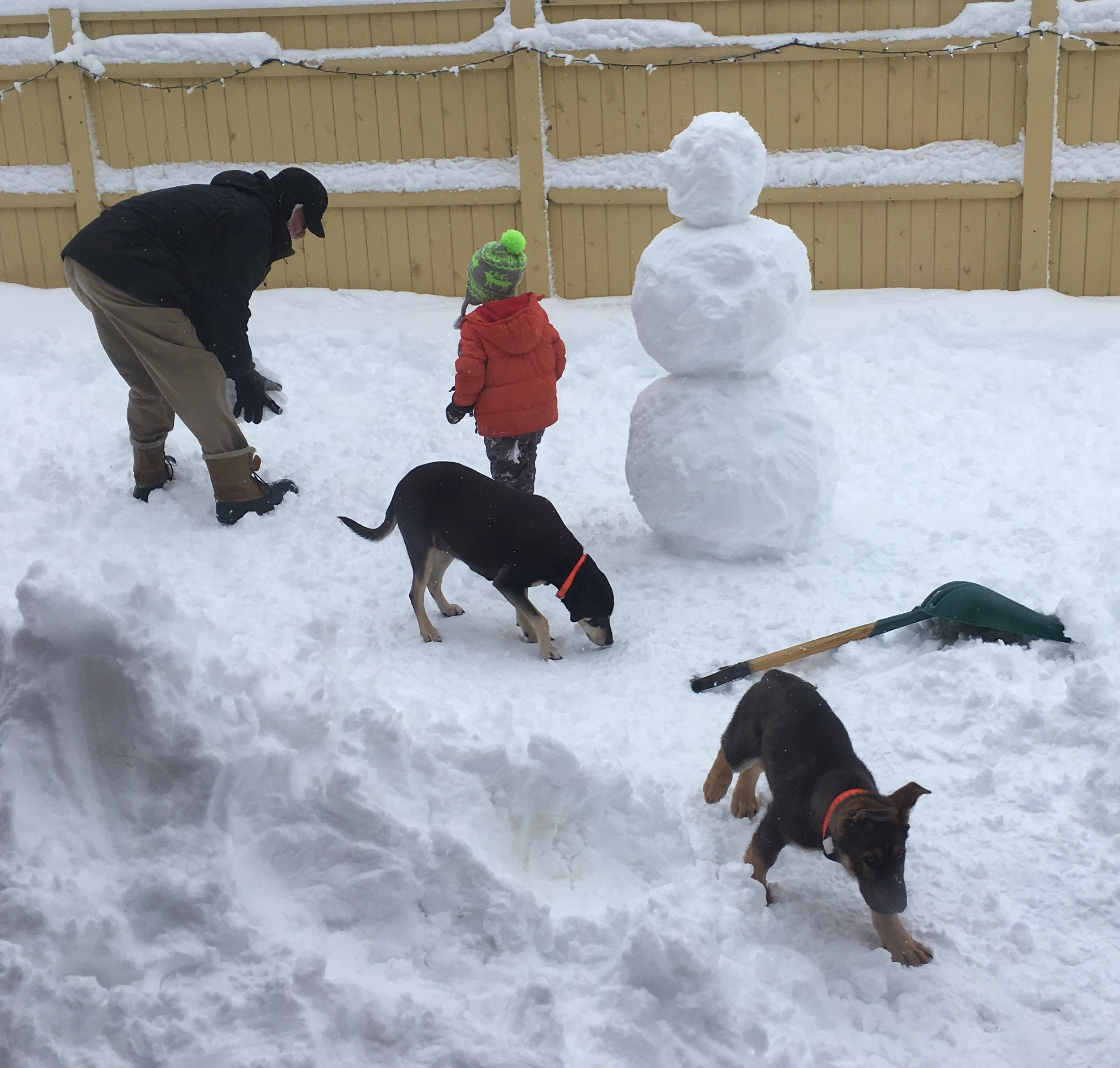
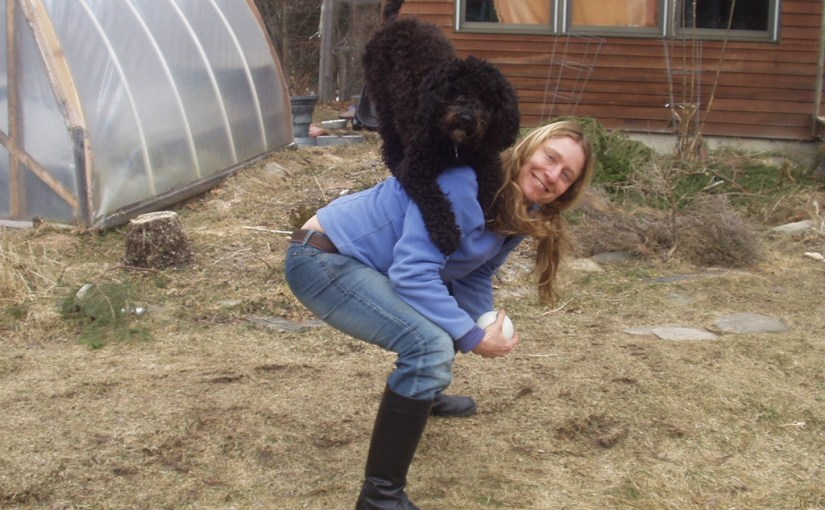
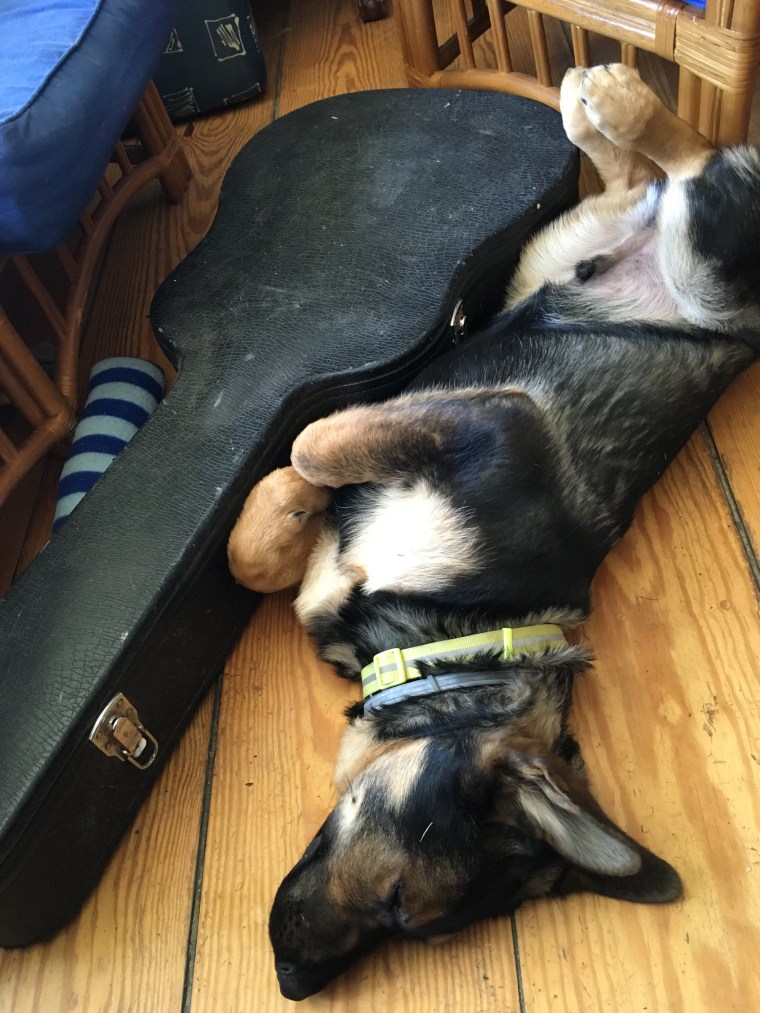
 There is nothing like having a german shepherd puppy to develop more empathy for clients who complain about biting puppies.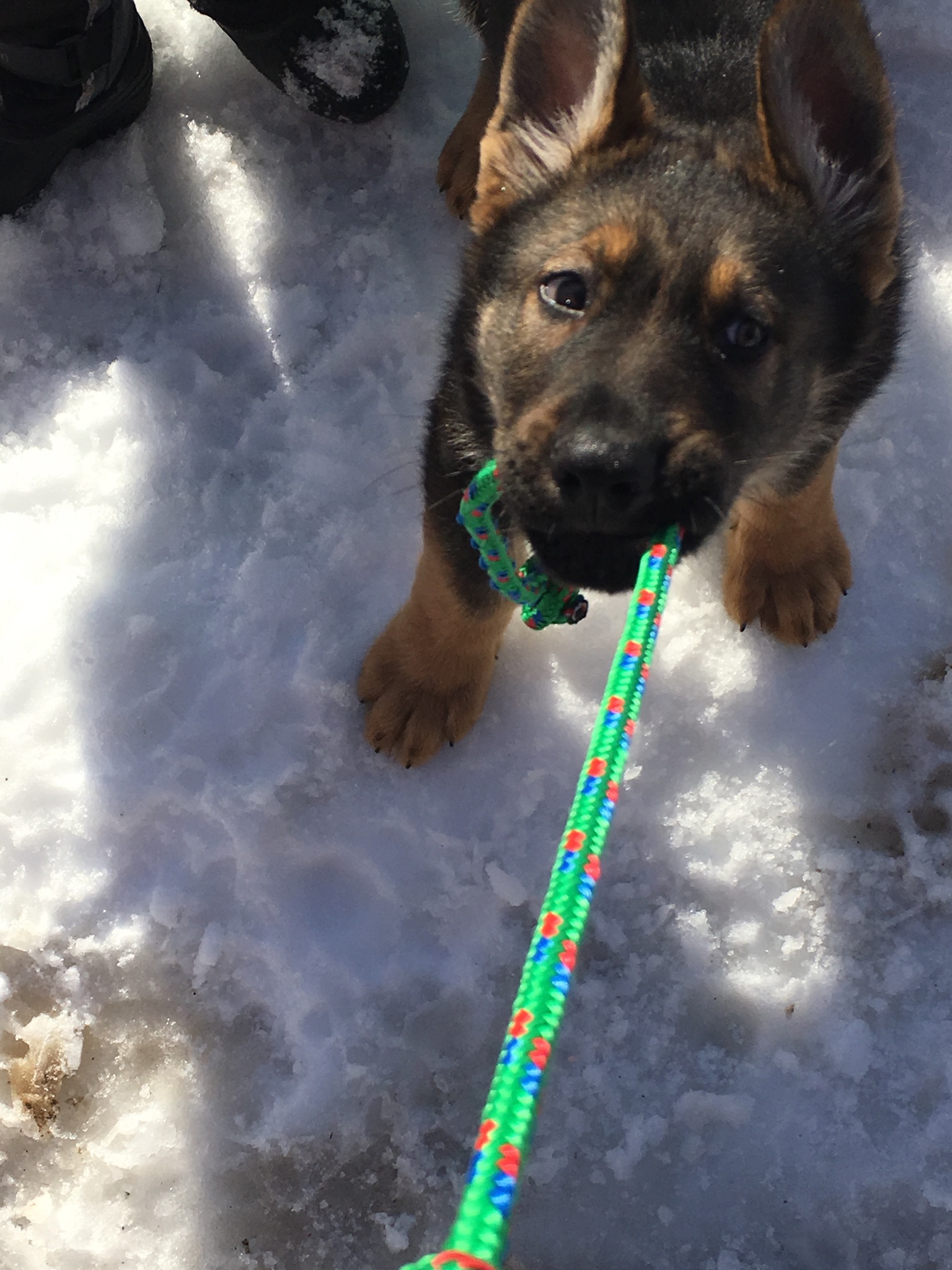

 at Bliss Woods Farm in Freeport, Maine