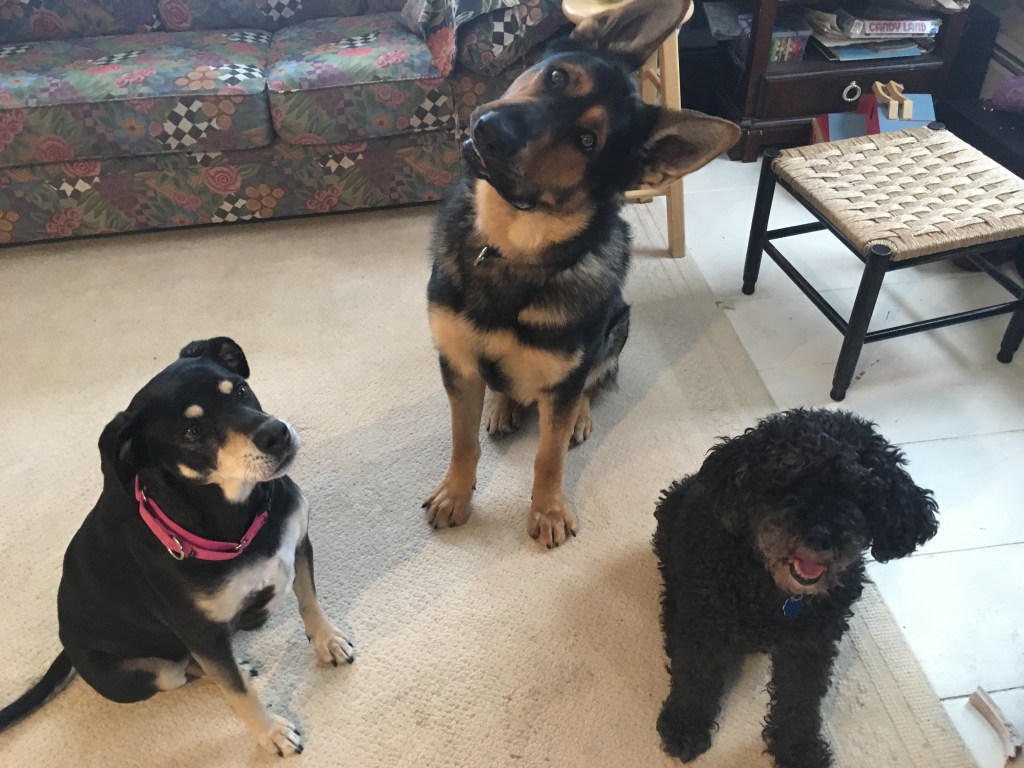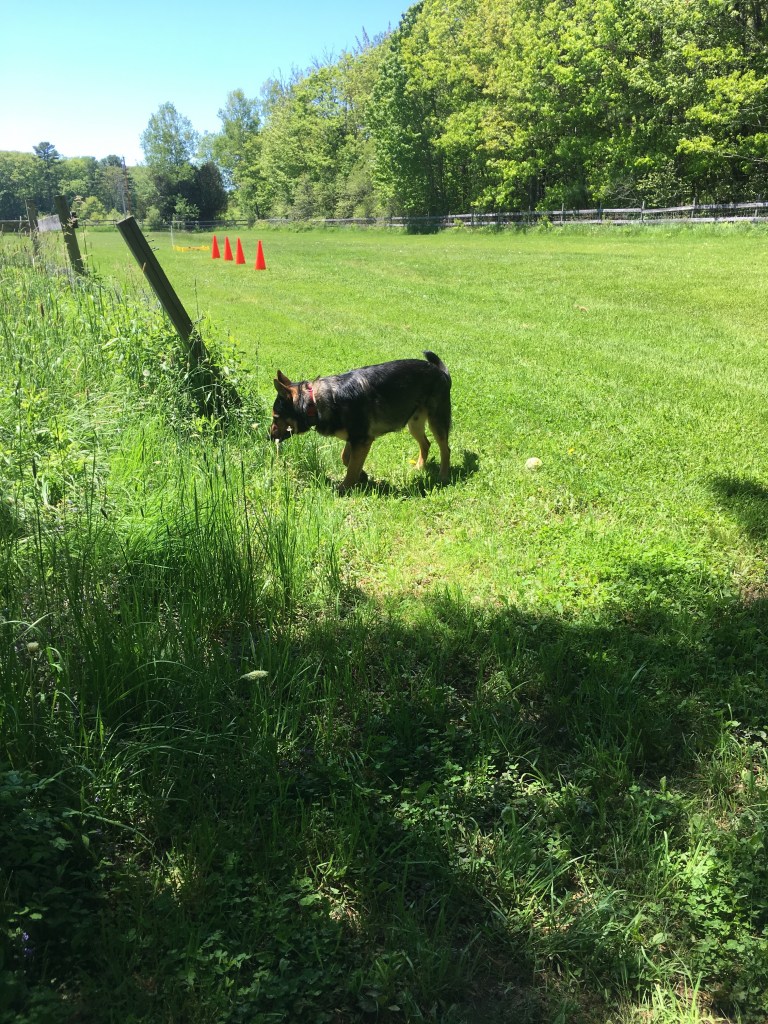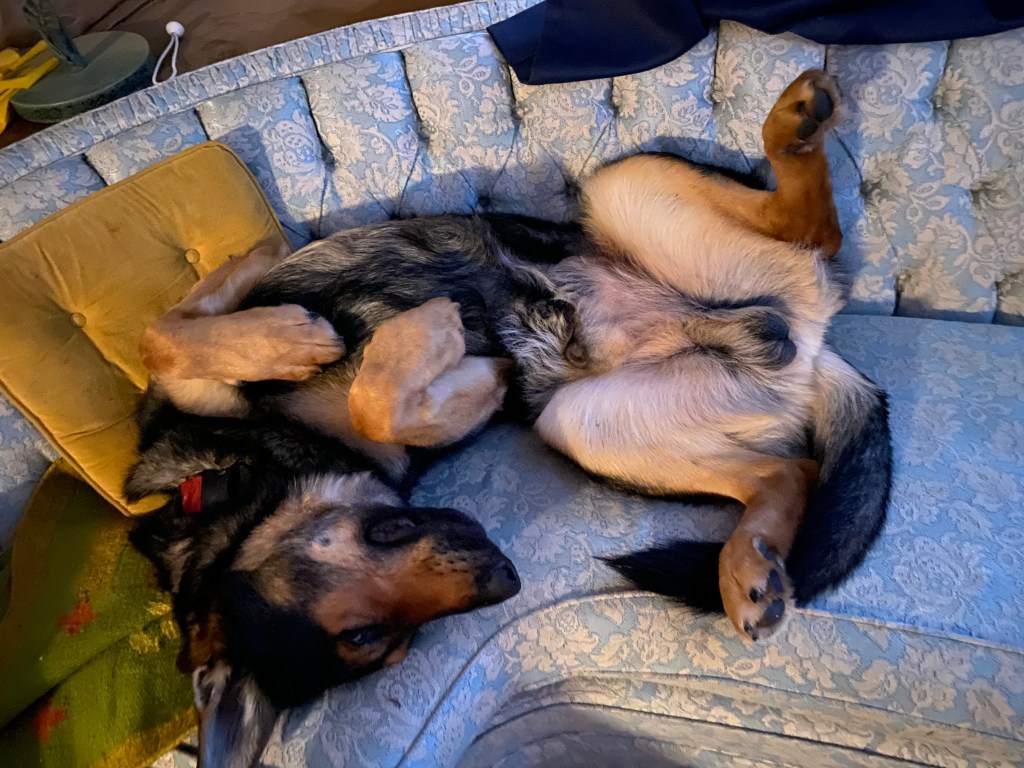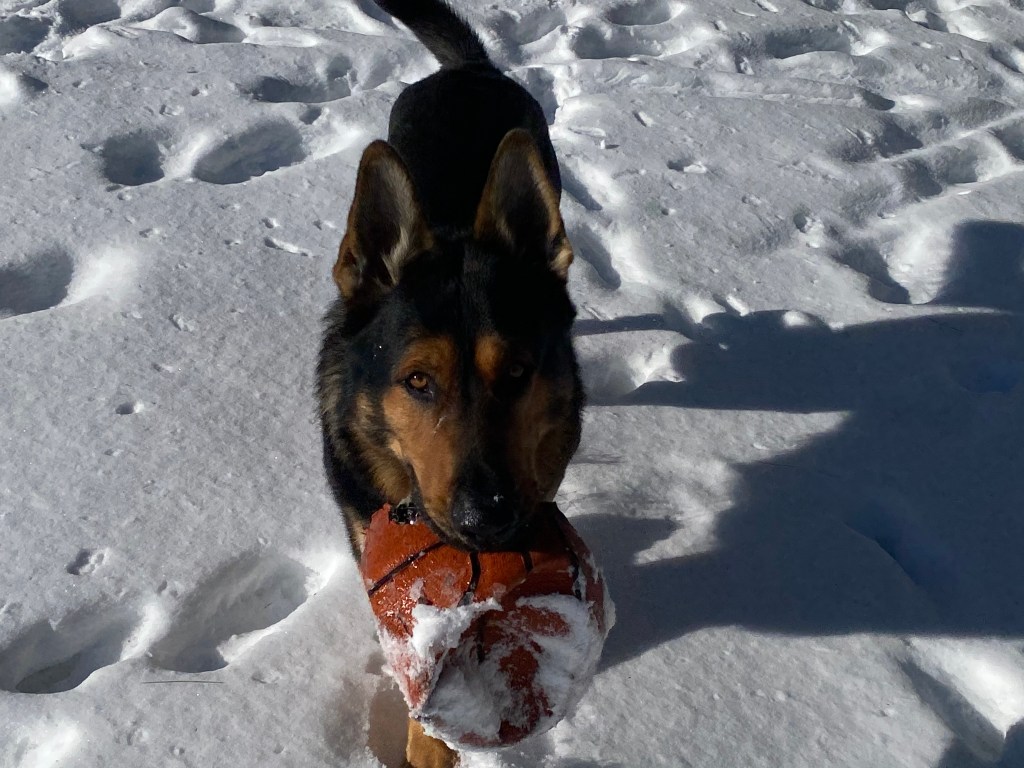
Why I avoid saying “leave it!” (part one)

I’ll add my two cents in the ranks of trainers who don’t create a “leave it” cue that means, “here is a thing you want to have and I’m not going to let you have it.”

Ideally the cue “leave it,” would signal a reinforcement opportunity (just like “sit” “down,” “water,” and all our other cues). “Reinforcement” based trainers train it by rewarding the dog for “leaving it.” But how does this “leave it” cue function when we’re not training it, but when we’re actually using it? How is our tone of voice when we say “leave it ?” What if you don’t happen to have a chunk of steak in your pocket when you are cuing your dog to “leave it” the steak on the plate?

If we’re teaching a dog a verbal cue that tells them “you can’t have a thing you want,” no matter that we are delivering food reinforcement during training, we’re associating a cue with negative punishment during real life. The function of punishment is to cause behavior to shrink, and in this case, that’s what we’re hoping will happen. When we train “leave it,” the idea behind the lesson is to get the dog’s inappropriate behaviors around stuff they shouldn’t have to shrink. There are two types of punishment. “Negative punishment” is when an animal can’t have something they want, and “positive punishment” is when something aversive such as pain, discomfort, fear is added immediately after a behavior. So “leave it” seems to be associated with negative punishment. But both types of punishment have problem side effects, because dogs can (and generally do) seek to avoid punishment through escape, avoidance, stealthiness, aggression. And if we aren’t there to say “leave it?” Goodbye cheese platter?

Saying “leave it,” points out reinforcement the dog can’t have. For many dogs, the cue just creates a “forbidden fruit” that they will take when you aren’t looking. It can stimulate anxiety and frustration that can actually prolong the growth of undesirable behaviors!

Instead, what if I teach my dogs to trust, and relax and know that I am always on their side. What if, instead of drawing attention to opportunities they can’t have, I can teach them to search for and focus on opportunities they CAN have?

I like it when my dogs alert me to “interesting things” in the environment. We train in tracking, and SAR games, we go on adventures. My dogs’ senses help alert me to things our environment. Their focus (just like our own) is driven by the CONTEXT of what we are doing. I don’t want to draw attention to things they’re “leaving”. It’s want them to focus on what they are being cued to DO.

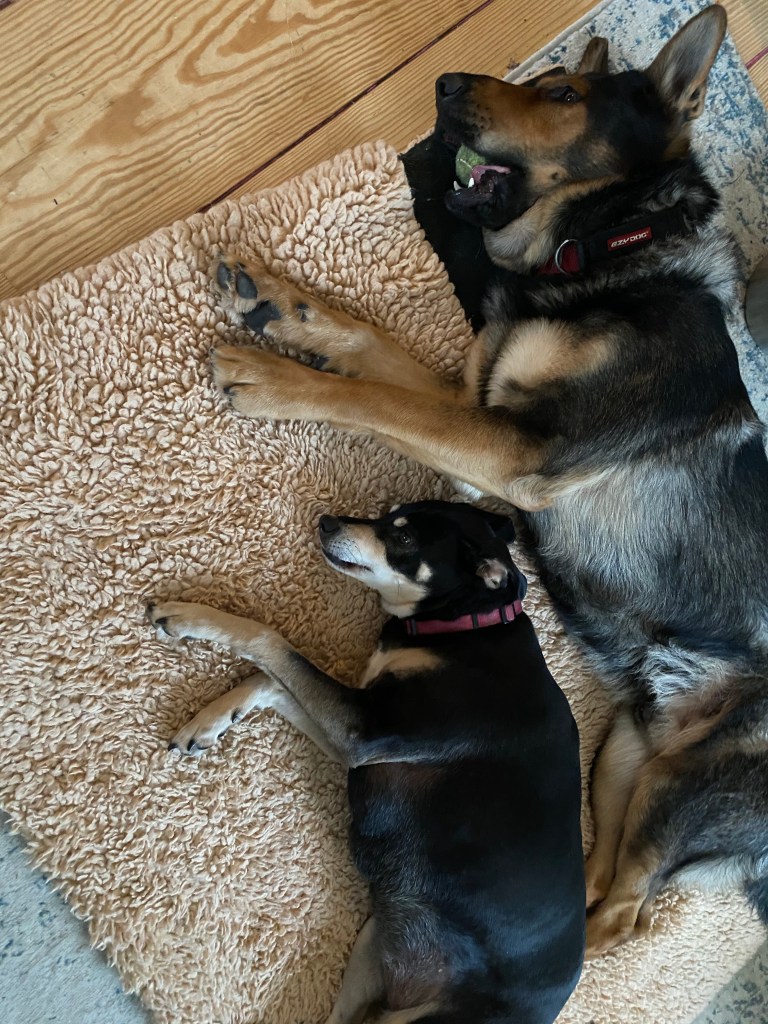
M’Ocean’s first party (at Peggy Dwyer’s!) So much good stuff!

My dogs think I’m a billionaire. They get everything they need from me. Distractions cue my dogs to check in with me. I don’t need to say “leave it.” I really notice this out on the trails, where thanks to our regular deliveries of reinforcements around surprises (BEFORE my dogs make a mistake), now my young dog senses something unfamiliar and looks at me (alerts me) with a face that says “what prize might this environmental surprise earn me today?” I don’t need to say “leave” anything because the distraction IS the cue.

Susan Garrett’s “It’s Yer Choice” games are genius, you should google, learn that game and follow her. Learning in “layers” (as she terms it) means dogs learn to focus on searching for reinforcement through you. I think of it as like learning how to drive a car. They know how you operate. Increasingly, I am able to leave treats all over the place. I don’t need to guard the treats. My dogs will choose to “operate me” (ie: perform behaviors I like) because it’s easier and plenty fun to get what they want from me rather than from chasing squirrels. This morning I had a big bag of homemade dog treats, all morning on the counter, easily within reach. I didn’t need to prompt “leave it.” I have bags of fish skins. The dogs wait for me to invent a fun reason to give it to them.

Every once in a while, I’ll need to tell my dog to “drop it,” or “go lay down,” or “off.” Those are behaviors you can picture, right? You could draw a picture of a dog performing any one of those behaviors. But the phrase “leave it” is abstract. Try to draw a picture of that. What does “leave it” behavior look like in “real life?” Different every time? If the dog grabs the crust of bread off the table, and you cue “leave it,” doesn’t it seem like the “leave it” cue is delivered late, after the dog has already made a mistake? Or if you delivered it just before the dog takes the toast, isn’t it drawing attention to something that you’d rather the dog ignore?

That’s a cue I don’t need.

I changed my mind.

So I called my veterinarian this morning and said, “I changed my mind.” I’m not going to get M’Ocean neutered — not yet, anyway. Here’s my reasoning (and I maintain the right to change my mind AGAIN).

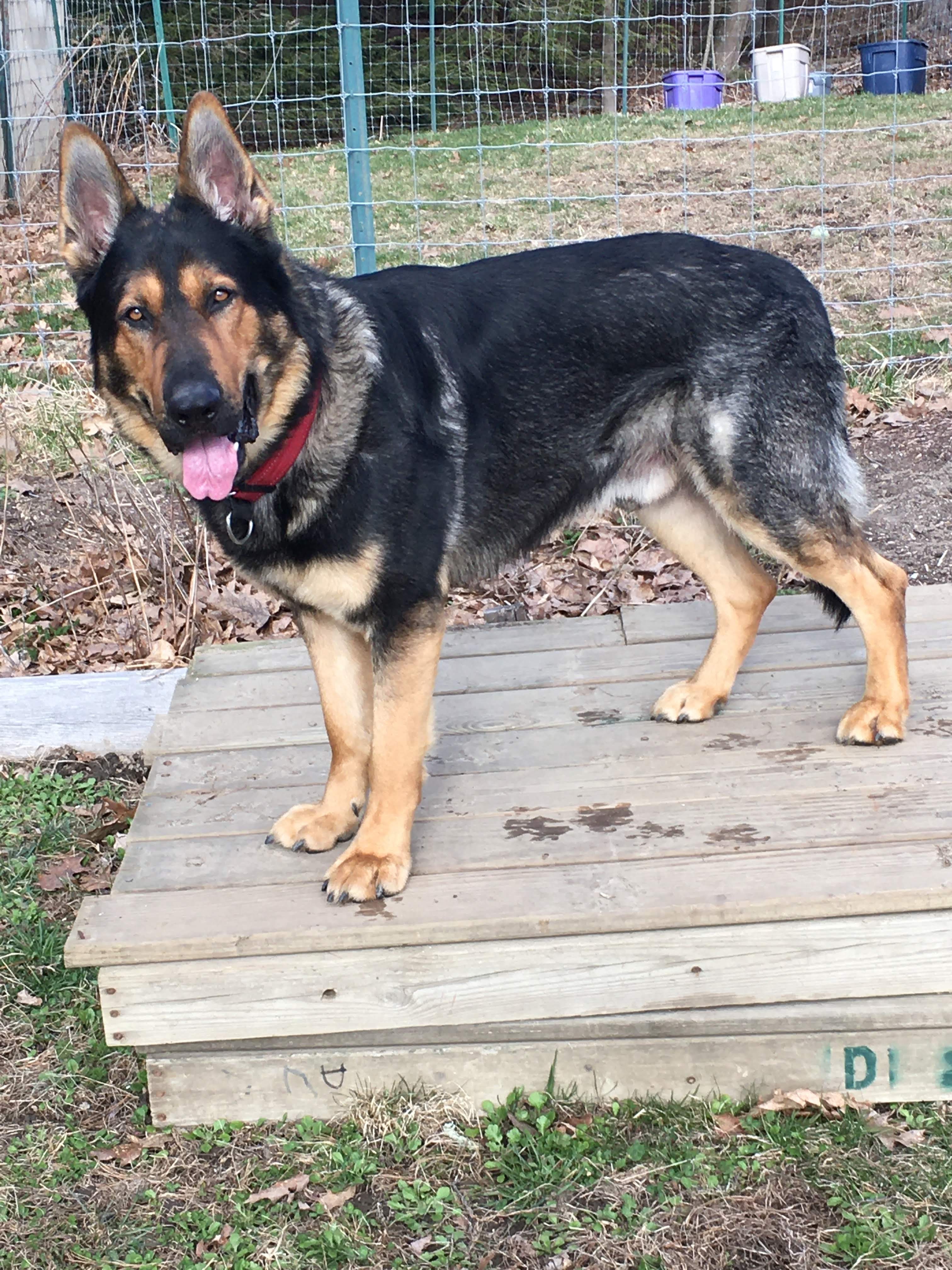
M’Ocean doesn’t go around marking or humping pillows or blankets. He does sometimes get overly excited around other dogs, where it seems like he would like to hump them. Recently when a sweet playful spayed german shepherd came running over to him and dived directly underneath him, he wrapped his arms around her and started humping. It wasn’t a dog fight, but she was pinned and it scared her. He let her go, he didn’t hurt her, but I guess that was the event that made me think, I want to make training easier.

And unfortunately, neutering might not make training easier. At least, not for my dog. I see plenty of neutered dogs who get very excited when they see other dogs. Learning how to play, especially when you’re the biggest strongest dog on the playground, takes time. He does best in a large group, and this pretty dog diving into his arms was a pretty big challenge! But M’Ocean is increasingly showing self control around distractions.

My guess is that testosterone levels will naturally decrease as he hits five years old and 6. Maybe we’ve already been through the worst of his hormones.

When M’Ocean was 11 months old, an older intact dog at a dog Canine Musical Freestyle event jumped over the ring gates, landed on M’Oceans neck, sent him flying and left him with a shoulder injury that took a few months and about $1000 to heal. Yeah, I still am upset about it, because the event organizers seemed to blame M’Ocean, as though it happened because he was intact. But the dog’s owner told me her dog is “an asshole,” and he had a history of repeated bad behavior. So, unprovoked attacks happen to neutered dogs too. And now M’Ocean is 3 and he is 90 lbs of confident, socially experienced, mature, ballsy dog. A dog, maybe even a coyote, would think carefully before jumping a dog that looks like M’Ocean does now.

So I’m thinking, if I’m going to have to keep on training him and being wary of coyotes ANYWAY, if neutering isn’t a guaranteed resolution of the typical behavior challenges I face in owning a large imposing looking working dog, then I might as well focus on training and see how far I can get with that. I will re-evaluate in the fall.

Keeping his natural hormones for just a few extra months, while he is still building muscle and bone in agility, that has some health advantages. It’s a lot of responsibility, but if I can handle and manage him safely, there are some real health benefits, protections for his bones, brains and muscle, associated with keeping him intact a bit longer. He is becoming more “conscious,” more of a real “thinking” dog every month. There are other options, such as chemical (temporary) castration, or a vasectomy. I have time to do some research. He’s a LARGE dog to be running in agility. He needs to be in peak physical condition. So, about that neutering? Not yet. I changed my mind.

Neutering my German Shepherd

I’m going to do it. Actually (remembering my childhood, where our family actually gelded our own pony, and it was common in those days to do that, maybe it still is, with elastic bands) I’m not going to do it, but my veterinarian is going to do it. She’s also going to do a gastropexy while she is at it, hopefully protecting him from torsion/bloat risk.

It’s hard to decide to neuter a dog. With Tigerlily, I waited til she was 3 years old. She was a rare breed (barbet) and in spite of how shy and prey driven she was, how she was really smaller than her siblings, I held onto that dumb desire to maybe breed her til she was three years old. She had a pretty miserable spaying procedure. Poor Tiger. I slept with her, holding a hot water bottle on her incision that night, and that helped. I wished I had spayed her earlier. Surgery doesn’t get easier as they get older.

M’Ocean is 3 years old too now. I am getting him neutered because I am realizing, I never want to breed him. I guess it takes me 3 years to realize that. Too many people use shock/prong/choke on these dogs and I don’t have a long list of people I would trust who want a GSD puppy. Also, a shock collar to teach him to avoid sexy coyotes seems like a worse training plan than neutering. As Denise Fenzi said, “If someone told me I could never eat another meal again, and there was a way to get rid of my craving for food, it seems like a no-brainer.”

M’Ocean is fully mature. 94 lbs. He’s basically a very confident assertive funny and friendly dog. I hate to do invasive things, but being a dog owner is invasive. Leash walking is invasive. The dog/human symbiotic relationship is as invasive as the hills. That dog has already left the doghouse. We’ve domesticated and changed dogs and we continue to do that.

It’s weird. Weird to have dogs who really feel like they are part of the family. My dogs feel like they are humans, kinda. They seem to believe I am their mom, or their Guru. They worship me, kinda. They aren’t looking to start another family. Well… my spayed older dog Bee is DEFINITELY not looking to start another family, but if I let M’Ocean spend a few days out in the woods this week, especially if I left bowls of food, probably he would go start another family, unless the male coyotes killed him first. But he’s living a good life amongst the humans, and in general he seems satisfied and well adapted to this domesticated dog arrangement.

I’ll let you know how it goes, and if neutering him changes anything in our lives, in good or bad ways. It’s going to cost me maybe $1000.00 which is just one more aspect of the ordeal. I really don’t like doing it, but after thinking it through, our risk versus benefit analysis, neutering him feels like the more responsible, safe, smart thing to do. And then next year, when we are hiking the Appalachian trail, I won’t have to worry quite so much about the dangerous ways sex hormones can influence coyote and dog behavior.

Why did you get a dog?

Lion with Matilda, a guest dog.

One day, I was upstairs writing and Dandylion was downstairs barking. I did NOT want to answer the door. I said “thank you!” several times, and finally, sighing, I went downstairs to see what the dog was barking at.

He was staring at the woodstove, barking his head off. The temperature gauge on the stovepipe was far above the dangerous red line. Chimney fire! Apparently a chimney fire makes noise! Who knew?!? I shut down the stove, gave Lion leftover chicken, called the fire department.

If Dandylion had been “obedient,” he would have shut up the first instant I said “thank you.” And the house might have burnt down, with me in it!

Canine eyes, ears, sense of smell are different than ours. Dogs can understand and do and know things that we can’t do or know. I like that. I want my dogs to trust me enough that they can disagree with me sometimes, and tell me what they know.

Once, we were fixing an old boat on a dock in Puerto Rico. It was nighttime, we were sleeping when Tigerlily started going nuts. I guessed feral cats, and told her “Thank you!” But she kept on barking, waking up the whole marina, racing up on deck, staring into the water, so I had no choice, I had get up. And oh look, there’s a teenager in snorkle gear getting ready to steal our dinghy! Good girl Tigerlily. Another time she woke us up barking because a junked ghost ship had broken off a mooring and was drifting up, about to smash into us. I learned to appreciate the value of seemingly “naughty” (confident, independent, communicative) behaviors.

Another time, I was renting out the house we’d built for extra summer income, and we were living in a nearby funky cabin. Our renter came to our gate needing some sort of assistance, and my dog Bee (this is well after Lion had passed away) went nuts, barking at the guy. How embarrassing! That’s my paying client! I’m afraid I spoke sharply to her. Stop that! Sit! So Bee gives me a look, but she is a good girl and she sits, I open the gate and the guy falls through, grabbing me on his way down, drunk as a skunk. Fortunately my husband was home and came out to see what the commotion was all about, but I apologized to Bee, and vowed never again to disrespect her when she was trying to tell me something.

Bee with my granddaughter.

Many many years before these dogs, I had a wonderful smooth coated St. Bernard, Sampson. I was working double shifts dispatching emergency services at a police department 4 pm til 8 am, and during the day me and Sampson would go to the local pond. I’d swim and sleep and he would just hang out, sleeping beside me, good as gold. One day I woke up and he was barking, I’ve never before or since heard barking like that, it was more like ROARING, circling around me.

I looked up to see three men headed towards me, with shovels on their shoulders. They were actually headed towards a little cranberry bog dike that was on the other side of me, to shovel it out. I tried to take Sampson’s collar, but he wouldn’t let me touch him. He just pranced in a circle around me, daring them to take one step closer. The workmen were forced to veer off, a big detour. My dog didn’t settle down til he saw them starting to shovel out the dike.

So, while I compete and train in obedience, I appreciate some “dis-obedience” in my dogs! Brains are good. I don’t want dogs to stop thinking. I try to help them develop their brains. I try to be more like their guru, and less like a prison guard.

If we are going to work or play together effectively, they need to trust and understand me. I need to understand them. So I’m not so much aiming to “command” them around , but we’re building skills so we can share a better life. I have dogs because there are things we can know and do with dogs that we could never do without dogs. Why do you have your dogs?