
Think, plan, do (as animal trainer guru Bob Bailey has been saying for years).
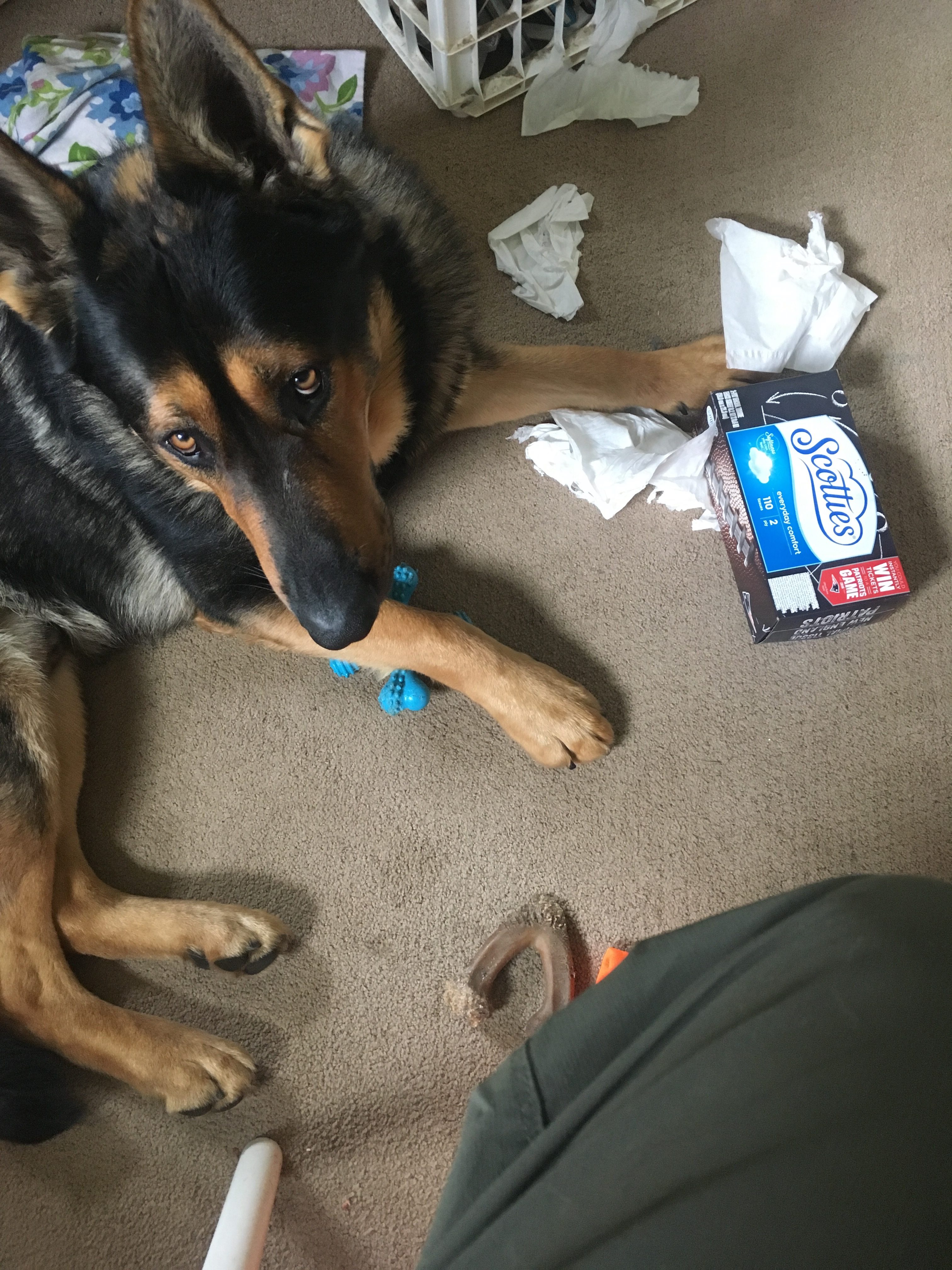
Dogs are emotional creatures, just like us. But typically, we are the ones with emotions that get in the way of teaching or learning. We get impatient, frustrated, reactive. It’s understandable.
Maybe the dog chewed our new pants pocket overnight, on the same day the husband left a pile of old barbed wire hanging in a location accessible to dogs, at the very same time that the President of the United States of America is using the name of Jesus to promote hate and violence and greed. Triggers get stacked.
So be it. Think. Inventory the emotions, accept them as they are, and care for yourself. Don’t wipe them off all over the environment. Take a break, get a drink of water, go for a walk. A nap, a one minute dance, or some yoga. Maybe lay outside and look up at the sky for a few moments.
Our ability cultivate our own positive mood and energy rather than spread around irritability — that’s a trainer essential. Self-knowledge and self-control helps pets trust us. Dogs don’t respond well to moody trainers. Snapping doesn’t help anyone know what to do.
Plan. Keep our training sessions short: not because dogs tire, but because we tire. That’s why we choose training environments carefully, not just because dogs might react, but because it’s too difficult for us to deliver reinforcements, or we tire more quickly. Break behaviors into tiny pieces for both the human, and the dog, set the dog/human up for success, not just to avoid frustrating the dog, but to avoid frustrating ourselves.
Do. Like in an airplane emergency: put your own oxygen mask on before assisting a child because if you don’t remain conscious, you won’t be able to help. Being conscious means recognizing wishful thinking and unrealistic expectations. Fear Free Professional trainers can help you and your dog have more helpful expectations. Ideally, talk with several trainers before selecting your dog training journey.
“Think, plan” in advance, so we know what to “do.” Dogs need us to be our best selves, even when we are tired, irritable, frustrated, or impatient. We can train ourselves to be better people at the same time we’re training our dogs.
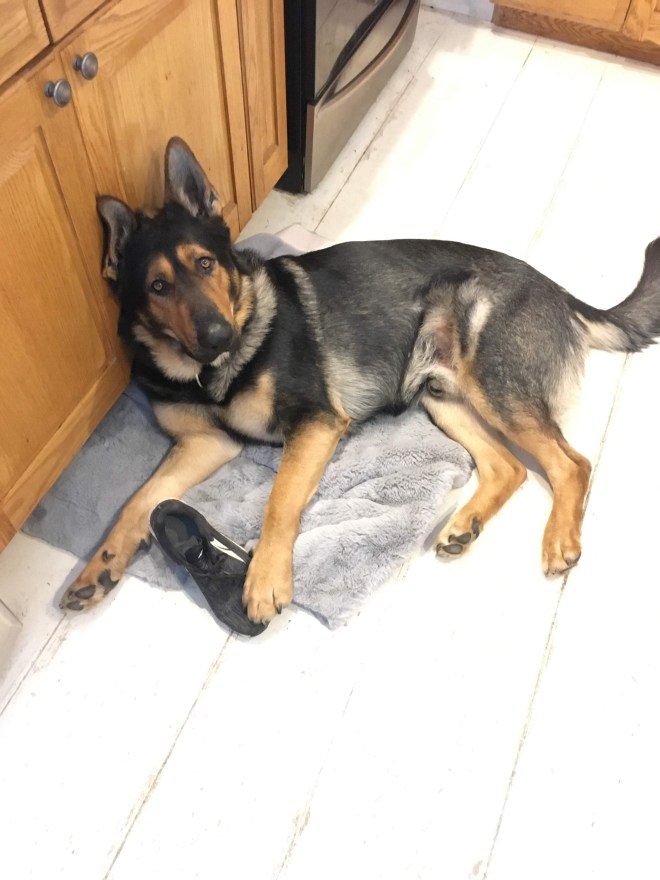

 at Bliss Woods Farm in Freeport, Maine