Canine Body Language (and why context matters)

by Jenny Ruth Yasi, CPDT-KA

Canine body language reading has become a “fad.” People look at a picture of a dog, describe the lift of the ear, the flick of the tail, the curl of the lip, the stance etc and then “read” the body language. I’m sure you’ve seen trainers observe dogs and state with certainty that the dog is “fearful” or whatever. I do it too, telling people, “your dog needs to poop” or “he’s asking for water” and when that appears true, they look at me like I’m a pet psychic.

But I’m not.

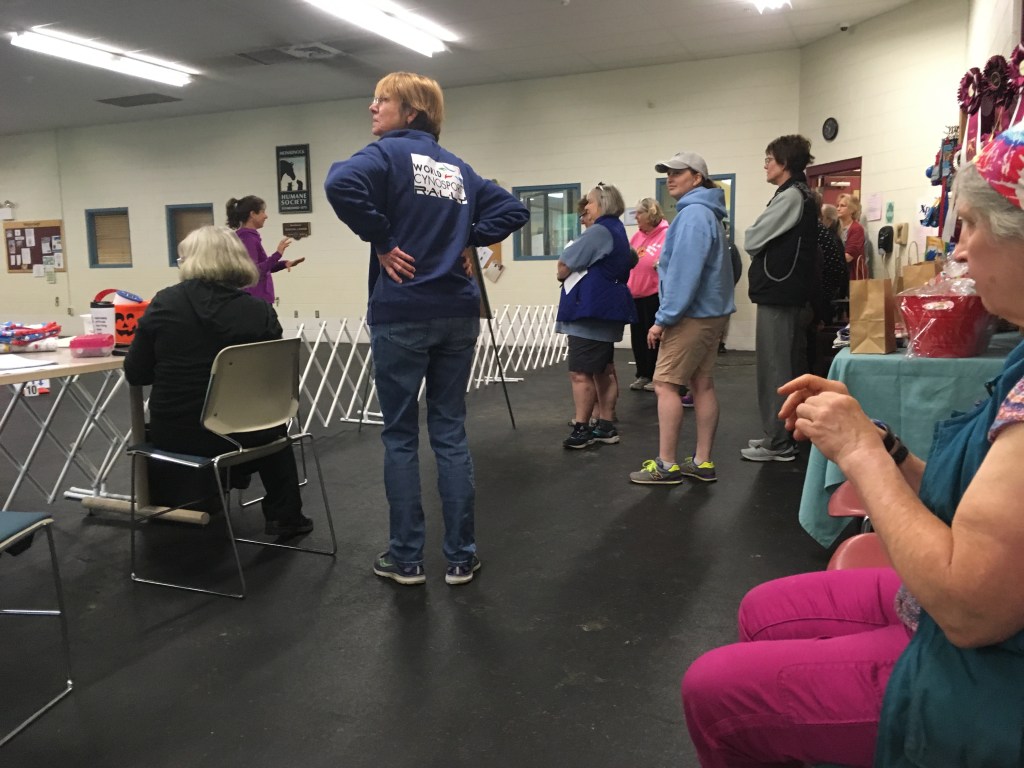
Think about how this works with people. Look at this image, for example. Great people at a dog event. What can you read from the body language? Honestly, not much, but knowing the context is a big help! People waiting. Focused on a speaker. You start guessing. But human body languages, like canine, are built over habits and many emotions going on at the same time, and we can’t read anyone’s mind from looking at a photograph. Amirite?
Oh how about look at this video, it’s got some great examples of canine body language. First please listen to it with the sound off and see if you can guess what’s going on here.

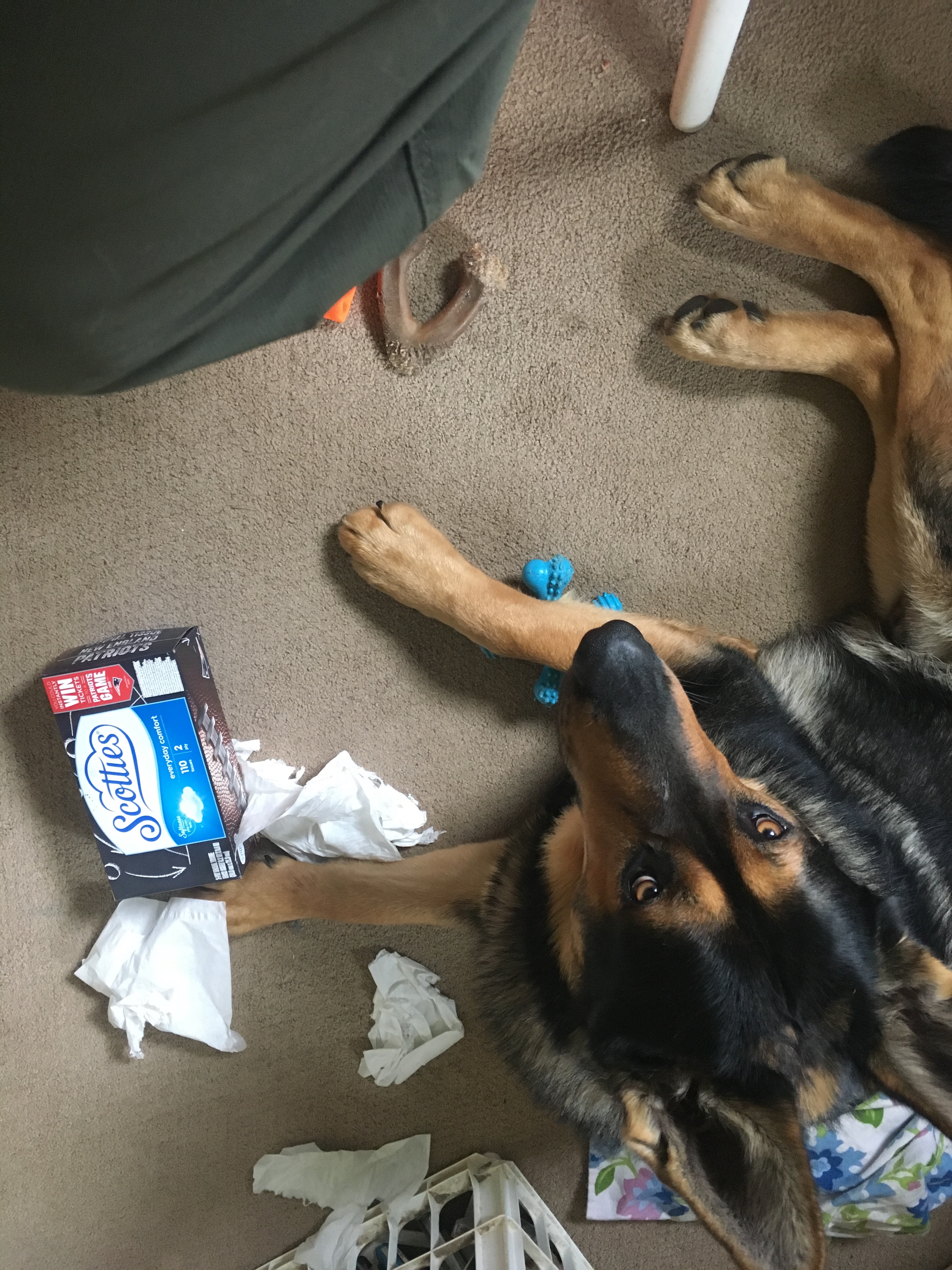
It’s actually a pretty interesting example of lots of classic, “easy” pieces of canine body language for you to read, and there is even some context shown, to be fair. Now listen to it again with the sound up. How did you do? Were you close? I’ll give you a little more context. The dude with the box is Charlie and he was nearly dead of starvation, a feral dog, when we brought him home from Puerto Rico a few years before this video was made. So he was well recovered, and he’s eaten many boxes I’m sure in his lifetime, so I always let him shred and eat a little bit of boxes if he wanted. It helped him handle the frustration of waiting for breakfast. The poodly girl was about 8 years old, I had her from 8 weeks, so she was my “old pro,” at waiting for breakfast and the yawning hound had been rescued almost one year previously, so she was the most recent addition to the pack, and still learning what she needed to do to get breakfast delivered. And she was best friends with Charlie.

Yes, sure, great that you noticed the yawn! Yawns are great little stress relievers, and we humans ywn too. But she wasn’t “terribly” stressed. One of the problems of this fad of canine body language reading is that people exaggerate what they see. OMG the dog YAWNED! That’s like, OMG the kid twirled her hair with her fingers!! We are always expressing little bits of tension and anxiety, little splashes of excitement and frustration, nervousness and boredom. We are full of all sorts of thoughts, emotions, feelings and we express them. They are fluid and changeable.

Of course it’s important to see how a dog is RESPONDING to various situations. “Response” is all about looking at body language in context. And so you’re maybe seeing how Charlie expressed some impatience (I want breakfast!), and the other dogs were in agreement. I don’t know but it seems as if Charlie was the spokesperson and Bee was the diplomat. Tiger was just staying out of trouble, confident that she didn’t need to say anything. Then you see how they react to what I said, and the only reason they react that way is because they’ve heard those words before. Notice how my poodly girl looks completely relaxed, laying on the couch. That doesn’t mean she isn’t every bit as anxious, excited, “stressed” as the other dogs. It means, she is choosing a behavior that has been highly rewarded in the past. She is performing learned behavior.

I’m not keen on pet psychics. We can’t “read” body language in ANY animal like we “read” a book. For example, what is this guy thinking?

Out of context, it looks like he’s waiting for a bus. But what Bernie said is that he was pretty much overcome with emotion, watching the inauguration. He was reflecting.I bet he was thinking about his own journey. He was not cold. And doesn’t Bernie usually look like that?

I’m not saying body language doesn’t matter. It’s very helpful to observe your dog’s body language and see how she acts in different contexts. Watch her body language when you serve dinner, when you get out the nail clippers, when she sees another dog, when she a friend knocks on the door versus a stranger. You get so you can tell, “oh, that body language means daddy, and this other body language means the UPS guy.” Watch her body language in the veterinarian waiting room (see the dander poof out of her coat?). And then you see the dander poof out in another situation and realize, oh, she might be nervous. How does YOUR dog express that she needs to pee? How does she ask for water? How does your dog show you that she doesn’t feel well? But can you tell if your dog has a toothache? Probably not from a photo, and maybe not even from a video.

Many dogs have quirky body language. Their friendly “grin” looks like a snarl, or they freeze and slink around, but they are just being polite and careful. No one can see a photo or a brief out-of-context video clip of a “wall eye” or a pricked ear, and read the dog’s mind. Just like humans, body language is about itches, arthritis, learned behaviors, indigestion, and not just about emotions. Body language can be intentionally deceptive. Much like humans, dog can bluff and act confident, when actually they are afraid.

My poodle girl used to sometimes appear like she was on her best behavior, when she was actually plotting to blast off after a squirrel. Actually her behavior in this video is a great example of how she looks when she is “plotting.” Resting, relaxed and calm, but maybe plotting to get that box when Charlie wasn’t looking.

“Analyzing body language,” can be helpful, entertaining fun and there is surely a grain of truth to it. But don’t fall for the “pet psychic” extremes of this fad. We can’t “read” canine body language any easier than we can “read” human body language. Can anyone read your body language like a book? They can certainly try, but they might be mistaken.

Intact

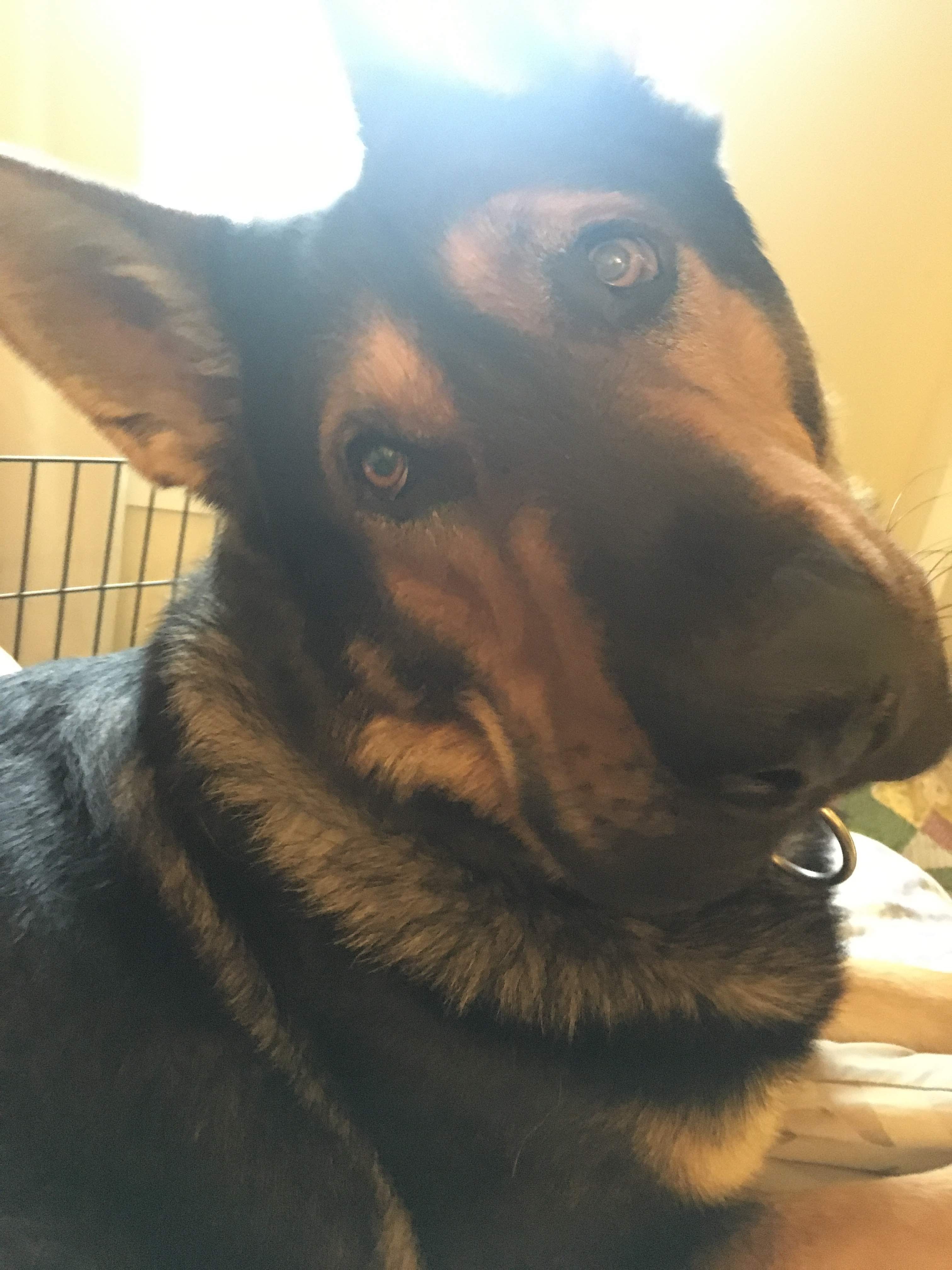
My 3 year old german shepherd dog is intact. This was on the recommendation of my veterinarian, who suggested if I am not having a problem with my dog’s behaviors, his reproductive hormones actually come with a host of benefits. I’ll let you google all that, but recently I noticed a potential downside.

We were out walking in the woods, and he began sniffing around in a manner that I’ve never noticed before. It wasn’t the way he sniffs when he is checking our a squirrel or deer poop. And a thought flicked through my mind. “I wonder if a coyote in heat might leave scent that is fascinating to a dog.”

Kind of a scary thought. I definitely don’t want my dog to discover that he could take off on me to find a coyote or wolf in heat.

So I did some research and it turns out that wolves and coyotes typically go into heat January through March. It’s near the end of January now.

Fortunately M’Ocean has been really good at sticking with me, and when I see him start to sniff around and drift in his thoughts, I clip a long line to him. The issue I get is when I start heading home, and he doesn’t want the walk to end. So I’ve added a new trick, which is leaving a raw beef bone in a container just inside my gate when we head off into the woods. He seems to remember that I left it there, and it has a different impact than the treats I carry, that poor sad unguarded bone, hanging out all by itself. This seems to make him more interested in getting home, less interested in diversions that might prolong his walk.

Dog training isn’t rocket science

I hear myself saying that a lot lately, and by that I mean, you need to use the parts of your brain that are about empathy, not “objectivity.” A dog is not an “object.” You are not an “object.”

I’m a firm believer in behavior science. So we do need to “count things” in behavior science. Maybe we can count how many barks, bites, successful retrieves, how many repetitions of undesirable behaviors. Count how many nuggets of meat, how many seconds, minutes duration, latency. How many weeks, months, years of sustained performance.

That’s the science. That’s the way we collect data and evidence, that’s the way we assess success or failure, but that’s not the way we APPLY behavior science.

We apply behavior science via lifestyle. That’s where we see behavior play out. Sure, exercises are good, but we can’t just take one behavior we observe at toilet time and deal with that separate from the whole picture of an organism’s life and environment. One behavior is connected to the next. The whole picture, as I see behavior science, is about understanding the importance of “lifestyle.”

So, more on that later, but with rocket science, we also aren’t sharing breakfast with the rocket. We don’t need to empathize with a rocket. But we do need to understand how rockets work. Rockets have rocket fuel. Dogs and people have reinforcement. Reinforcement is a lot more complicated than rocket fuel.

And it’s “all relative!” What’s reinforcement? I can promise you it isn’t always “petting,” and not always “roast beef” either (though I’ll take the roast beef when I’m training my dog). Dog’s won’t always take food. An icy orange popsicle is only appealing certain moments, but at that moment!! There’s nothing better! Understanding reinforcement isn’t rocket science. Not at all. It’s much more complex.

And when does reinforcement begin? Did it begin before you even give your dog a cue? When you stick your hand in your pocket to get the treat? Or maybe when you were chopping it up on the counter? Maybe the reinforcement began when you said, “sit!” And definitely when you put the food in the dog’s mouth, UNLESS you have a handful of treats, and you put one treat in the dog’s mouth, and you take six treats away (from the dog’s perspective).

Oh yeah, there are things to count, in the warp and weft of behavior and environment. Yes we can numerically influence behaviors by making specific changes to the environment. Well okay. I guess that is kinda like rocket science.

Resource Guarding versus

Trust me

Some say, “I don’t care WHY the dog does this, I just want him to stop!” And if you don’t care why dogs resource guard, read something else. But I find helpful to wonder why. When I think about it, “resource guarding” might be a somewhat “normal,” or understandable, defensive response.

Picture your reaction if someone tried to steal a bite off your plate . That happened to me once, and I almost snapped! Imagine if someone borrowed your bed, car, boyfriend or job without getting your permission first! It may be somewhat “instinctual” for us to guard, hide and protect our stuff,  but aggressive behavior around resources is expressed where resources feel threatened, or where there’s a sense of competition over a limited resource. Imagine if you felt there was only so much water to go around. Maybe you’d fight for your share?

Some dogs learn that dramatic noises or behaviors chase away “threats.” And oh, the feeling of power when another dog runs away squealing! Apparently it’s a bit intoxicating, and unfortunately, that powerful feeling can become a form of entertainment for many a bored dog.

As always, first, rule out any physical issues with your veterinarian. Tick-born diseases, thyroid disease, pain, dementia, seizures, rabies, toothache etc can all contribute to aggression arising in dogs. Veterinarians can also prescribe anti-anxiety medications which can make conditioning more relaxed behaviors easier.

Next, make an inventory of everything that seems like a problem. Write in a journal all the details that surround everything that goes wrong in your relationship with your dog.  Where do problem behaviors take place? What time of day? What’s the weather or other circumstances? Is someone cooking or cleaning or visiting? Is it noisy or quiet, hot or cold, bright lights or dark? Is the dog tired? Hungry? Are YOU tired hungry? Recently immunized? What is going on? Is the dog frightened? Excited? Bored? Is the dog hunting? Is the dog frustrated? What is the dog frustrated about or stimulated by?

Some dogs have been previously punished for growling, so they don’t warn you about their feelings. Instead of growling when they feel pressured, they go straight to a bite. So…don’t punish growling, and don’t punish dogs who take stuff. Say “thank you for letting me know!” to a dog that growls, and deliver yummy food rewards to dogs when you need to take something away from them.

A client dog, Barney, loved to aggressively guard almost anything. If a dog regurgitated on the ground and I cleaned it up, two days later Barney would be laying on the spot of scent, ready to startle any dog who dared approach. For Barney, resource guarding was pure entertainment. More addictive than facebook!  As soon as you see resource guarding, enlist your entire household to change the game into one that makes everyone, not just the dog, happy.  

Some recommend that you pick up and keep all resources away from the dog. That doesn’t work very well, as it is makes each resource even MORE valuable, and you can’t possibly pick up and put away every stinky spot on the rug. And what if the thing they are fighting over is you?

Instead try teaching the “trust me” game.  Many trainers call this game “trade ya,” and it should be a regular part of life with any dog. The idea is to show your dog that whenever you (or another dog) takes anything away from your dog, your dog gets “paid”  with something even better. Start the game by giving him something low value – maybe a cardboard box to play with, and then trade it with a piece raw beef. After he’s eaten the beef, give him back the cardboard box. That was easy!

You can also do this with dog/dog trades. If you see one dog steal a toy from another dog? Give the dog who lost the toy an even BIGGER prize. Reward your dog when the other dog takes his stuff.

Practice trades dozens of times a week. Practice saying “trust me!” as you take away the popped tennis ball and give him a hunk of chicken. When the chicken is gone, give him back an even better tennis ball! You want the trade to turn out better than the dog expected. Who wouldn’t love that? “Trust me” as you take away your broken eyeglasses (oops, hate it when that happens), and reward him with a piece of flavored rawhide. “Trust me” when the sibling dog takes away his favorite toy, give the sibling dog a milk bone and give the stolen toy back to the dog who loves it. If YOU are protecting your dog’s “special stuff,” your dog doesn’t need to protect it.

We aren’t rewarding the dog for stealing eyeglasses, we’re rewarding him for giving them back. After all, how can s/he  know which items are his/hers and which are not?  My three year old dog had one toy that he REALLY loved (till it was destroyed) and I gave it back to him every time his sibling dog took it. The next thing I knew, the two dogs were playing with the toy together! His confidence that it was “his” toy, that he didn’t need to guard it (because I kept giving it back to him) had increased to the point that he wanted to share it!

Our goal is to see tails wagging and happy eager ears whenever someone intervenes in whatever the dog is doing. Over time, dogs learn to “trust” that you kicked them off the bed … because you wanted to show them the raw chicken wing you “found” in the crate! They learn to “trust” that if another dog steals their ball, you give them a hotdog or another ball (or their special thing). They “trust” that there is PLENTY of good stuff for all! Over time they learn which items are available for chewing and which are not.

 Safety gear — leashes, gates, crate training, muzzle training—are essential, especially if you have kids or other animals, or your dog is displaying dangerous behaviors. But often, the biggest success comes with cultivating your dog’s sense of resource abundance and security.

 I cultivate resource security partly by flooding the environment with resources. You want identical resources. If I have six dogs, I dump out a bag of 24 brand new tennis balls. If one dog gets a dog bone, they ALL get dog bones and there are lots of extra bones too.

When dogs behave aggressively around food treats, if you can, practice with the dogs on opposite sides of a safe fence or gate. If this is too much, you could hang a piece of fabric over the fence to reduce the visual stimulation. Throwing handfuls of identical low value food (many tiny pieces, such as Cheerios, or pieces of bread, or “Charlie Bears.” ). You’ll have the dogs grazing on both sides of the fence. Throw the food far, abundantly, by the handfuls so dogs and treats are spread out, and the dogs sniffing around at a comfortable distance from each other. You can also try giving each dog long lasting chews on both sides of the fence, to help dogs habituate to seeing/smelling/hearing each other dogs eating, while safely separated, without experiencing any threat. Allow dogs to have the space and privacy they need.

Skills to learn:

Playing jump up and off is fun. Ask the dog to jump up, and then get off the bed, because you found some chicken over here!  Practice jump up and get off for a treat.

If you need/want to practice taking an item away from a dog, first play with a tug toy. Drop the toy and with one hand gently take the dog’s collar. Don’t touch the item in your dog’s mouth. Have an excellent food treat in your hand other hand. As soon as the dog drops the toy, yay, praise and give him the treat as you release the collar. Then, give him back the toy again, playing a little game of tug. Take the dog’s collar as before, while dropping, not touching, the toy. Wait and when the dog drops the toy, say “drop it!” This time give the dog a raw beef bone or something chewy and long lasting as you deliver praise. Pick up the toy and put it away. My goal is to teach dogs to “trust me” when I ask them to get off the bed or take the toy (or bone or dead mouse), and reward them highly!

Evaluate:  Are you reinforcing your dog(s) enough for sharing? Is there plenty of “good stuff” to go around, or is your dog being asked to share too much? Do you reward him EVERY time you take a toy or other item from your dog? Go over your inventory. What the dog is experiencing? When? Where? How can you make the learning process more fun for you and your dog? If s/he “trusts” you, she will want you to be in charge of guarding the resources!